Ultra Long Range Jet
Gulfstream G700 charter
The Gulfstream G700 is an ultra long range jet built by Gulfstream Aerospace with a published range of about 7,750 nm, typically carrying 14–17 passengers.
Unverified Specifications source: Gulfstream G700 specifications (gulfstream.com) (https://www.gulfstream.com/en/aircraft/gulfstream-g700/)
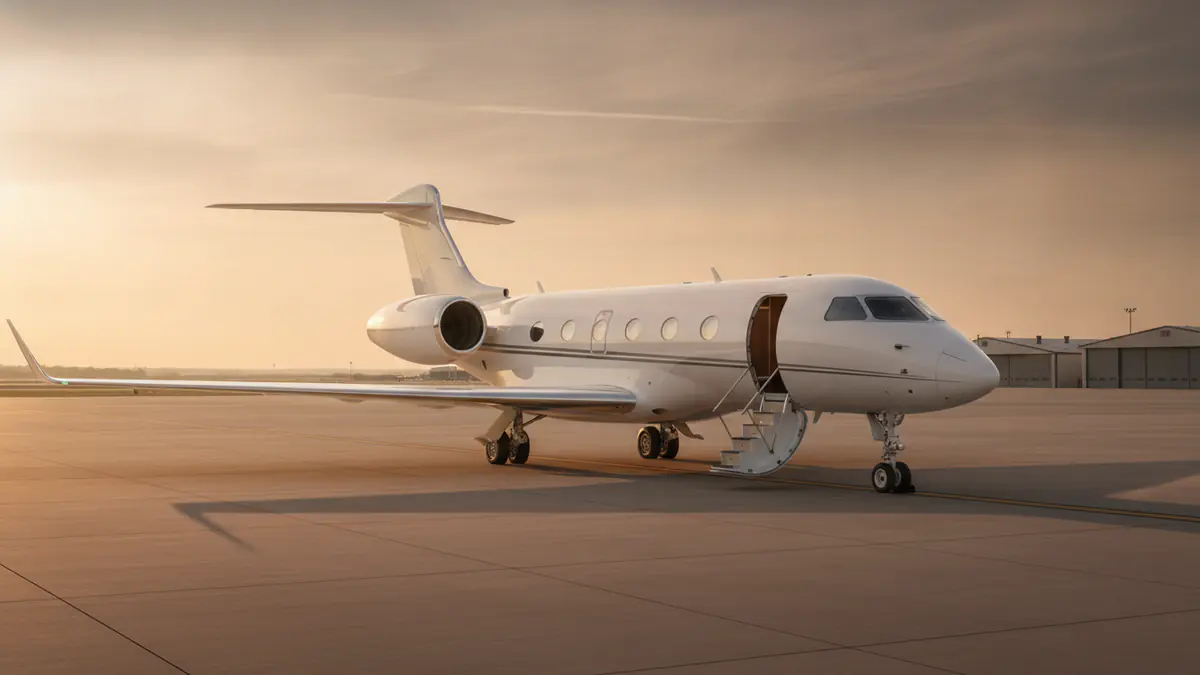
- Range
- 7,750 nm
- published, not practical
- Cruise
- Not yet verified
- Passengers
- 14–17
- max 19 certified
- Cabin (H × W × L)
- 6.3 × 8.2 × 56.9 ft
- Baggage
- 195 cu ft
- In production
- Yes
Where the Gulfstream G700 can fly nonstop
Screened against our route set with a practical-range margin.
Of 104 city pairs we cover, the Gulfstream G700 can typically fly 104 nonstop.
| Route | Distance | Range |
|---|---|---|
| New York – Dubai | 5,951 nm | Nonstop |
| London – Los Angeles | 4,718 nm | Nonstop |
| Geneva – Aspen | 4,543 nm | Nonstop |
| New York – São Paulo | 4,162 nm | Nonstop |
| London – Aspen | 4,140 nm | Nonstop |
| Hong Kong – Sydney | 3,993 nm | Nonstop |
| London – Miami | 3,823 nm | Nonstop |
| Nice – New York | 3,464 nm | Nonstop |
| Geneva – New York | 3,352 nm | Nonstop |
| London – Washington, D.C. | 3,179 nm | Nonstop |
Gulfstream G700 charter cost
Charter pricing for ultra long range jets in our model runs US$12,500–US$17,500 per flight hour Estimate. Individual aircraft vary with age, interior, operator and base. This is the cost to charter, not to buy.
New York to Dubai: about 13 h 25 min, US$268,000–US$375,000 one way.
London to Los Angeles: about 10 h 45 min, US$214,000–US$300,000 one way.
Geneva to Aspen: about 10 h 20 min, US$207,000–US$289,000 one way.
Other ultra long range jets
| Aircraft | Range | Passengers | Baggage |
|---|---|---|---|
| Bombardier Global 5500 | 5,900 nm | 13–15 | — |
| Dassault Falcon 7X | 5,950 nm | 12–14 | — |
| Dassault Falcon 8X | 6,450 nm | 12–14 | 140 cu ft |
| Bombardier Global 6500 | 6,600 nm | 13–15 | — |
| Gulfstream G600 | 6,600 nm | 14–16 | 175 cu ft |
| Gulfstream G550 | 6,750 nm | 14–16 | 170 cu ft |
| Gulfstream G650 | 7,000 nm | 14–16 | 195 cu ft |
| Bombardier Global 7500 | 7,700 nm | 14–17 | — |
| Gulfstream G700 | 7,750 nm | 14–17 | 195 cu ft |
| Bombardier Global 8000 | 8,000 nm | 12–14 | — |
Gulfstream G700 charter at a glance
A Gulfstream G700 charter gives you the newest flagship in Gulfstream's line-up: an ultra-long-range jet with a very long, multi-zone cabin, built to fly between almost any two major business centres without a stop. Gulfstream publishes a range of 7,750 nautical miles at Mach 0.85, and 6,650 nautical miles at the faster Mach 0.90, according to the manufacturer's G700 page and its parent company General Dynamics.
The facts above this guide come from our dataset: published manufacturer or public figures, not independently verified. For the G700 that includes range, passengers, cabin dimensions, baggage and sleeping capacity; cruise speed is left blank because we have no published figure for it, so the table shows what we can stand behind rather than a guess. This guide adds the context a traveller needs: what makes the G700 different from older Gulfstreams, what that long cabin means on a real trip, which routes it covers and how charter pricing works for an aircraft this new.
JetPriceCheck is a charter broker. We do not own or operate aircraft. When you ask for a G700, we approach licensed operators that have the type on their certificate, check availability for your dates and present the options side by side. More about how we work is on the JetPriceCheck homepage.
A new aircraft in the charter market
The G700 is recent. It received its US Federal Aviation Administration type certificate in March 2024, after more than 4,000 flight test hours, and European Union Aviation Safety Agency certification followed in May of the same year, according to General Dynamics. Deliveries began shortly afterwards.
That timing matters for charter clients in three ways:
- Supply is still growing. Most G700s are privately owned, and only some are made available for charter through operators. In many regions there are far more Gulfstream G650s and Bombardier Global 7500s on offer, so a G700 request may need more lead time or more flexibility on departure airport.
- Cabins are fresh. Every G700 in the market is only a few years old, so you are unlikely to meet a dated interior. The differences between aircraft are about owner choices in layout and finish rather than age.
- Positioning can be significant. With fewer aircraft available, the nearest suitable one may be based far from your departure. Positioning time and cost therefore play a larger part in the quote than on more common types.
If you ask for a G700 and none is available for your dates, we will tell you plainly and show you the closest alternatives rather than stretching the search.
The G700 cabin: why length changes the trip
Gulfstream describes the G700 cabin as about 56 feet 11 inches long, the longest in its class according to the manufacturer and trade coverage. Our dataset lists about 56.9 ft long, 8.2 ft wide and 6.3 ft high, and the practical effect is easy to describe.
More zones, not just more seats
The extra length lets owners divide the cabin into several distinct living areas. Gulfstream markets layouts with up to five zones, which on a real aircraft might mean a forward club area, a dining or conference table, a lounge or entertainment area, a separate crew rest and a private rear stateroom. The exact layout depends entirely on the specific aircraft, so always ask for the floor plan and photos of that tail.
On a long flight, zones matter more than the headline passenger count. A family can put younger children to bed in one area while adults eat in another. A business team can hold a working session at the table without disturbing colleagues who are sleeping.
Light, air and noise
Gulfstream's large oval windows are a signature of its long-range jets, and the G700 carries that design forward. Clients who have flown older aircraft often mention two things on newer large-cabin Gulfstreams: a brighter cabin, and a quieter, less tiring environment on a long sector. Both are hard to express in a spec sheet, and both vary somewhat with interior choices, so we treat them as qualitative rather than numeric claims.
Beds and seating
Our data shows a typical 14 to 17 passengers and a published maximum of 19. For overnight flights, plan around flat beds: published figures give up to 13. A stateroom may offer a fixed bed, and divans and some seats convert into berths. Tell us how many people need to sleep flat and we will ask each operator for their real configuration.
Baggage
As on other aircraft in this class, the baggage hold on a large-cabin Gulfstream is normally reachable during the flight, which is handy on a long trip. Our dataset lists about 195 cubic feet, so if you are travelling with skis, golf bags or a lot of luggage on a full cabin, tell us early and we will confirm with the operator.
Gulfstream G700 range and the routes it covers
The route screen above tests the G700's published range against our corridors with a practical margin for winds, reserves and payload. On that basis every corridor in our current set is typically nonstop for the G700, including the longest ones:
- New York – Dubai, the longest corridor we cover, where older or smaller long-range jets can be marginal.
- London – Los Angeles, Geneva – Aspen and London – Aspen, where westbound headwinds in winter are the real limit.
- New York – São Paulo and Hong Kong – Sydney on long north–south and Pacific-rim sectors.
- Dubai – Singapore, London – Dubai and Madrid – Dubai between Europe, the Gulf and Asia.
Treat the list as a screening estimate. The operator's flight planning confirms every trip against the day's winds, weights and airport limits, and a route that is easy in summer can be tight on a strong winter jet stream. Our guide to private jet range explains the gap between a brochure range and what an aircraft can do on the day.
Speed as well as reach
Gulfstream's published figures show that the G700 still offers a very long range at Mach 0.90, not only at the slower long-range cruise speed. In practice that gives operators a choice on medium-long sectors: fly faster and shave time, or fly at a more economical speed with extra margin. On a transatlantic trip that choice might be worth tens of minutes, which matters more to some clients than others.
Gulfstream G700 vs the alternatives
The peer table above lists other ultra-long-range jets in our data. This is how we frame the choice.
| If you want… | Look at | What to weigh |
|---|---|---|
| Gulfstream's newest large cabin | Gulfstream G700 | Newest interiors, longest cabin; fewer aircraft available, so book earlier. |
| Comparable flagship reach, more supply | Bombardier Global 7500 | Four-zone cabin, in service since 2018; often easier to source. |
| A proven Gulfstream, often at a lower rate | Gulfstream G650 | Very capable; the longest sectors can be marginal on our screen. |
| A slightly smaller long-range Bombardier | Global 6500 | Shorter cabin, still long legs, often good value. |
| Good airfield performance on long trips | Dassault Falcon 8X | Three engines, well regarded at more demanding airports. |
| An older, widely available option | Gulfstream G550 | Check range carefully against the specific trip. |
The ultra-long-range jets category page sets out the whole class, and our aircraft guide covers every category from turboprops upwards.
Where the G800 fits
Gulfstream also builds the G800, which shares much of the G700's technology, including its Rolls-Royce Pearl 700 engines, in a shorter cabin with an even longer published range. Gulfstream positions it as the successor to the G650 family. On charter, the G800 is still rare. If you see one quoted, the choice against a G700 is essentially cabin length against the last few hundred miles of range, and for most routes we cover the extra range will not be needed.
Gulfstream G700 charter cost
The cost section above shows the hourly estimate range for ultra-long-range jets in our pricing model, built on published market rates, with example trips. These figures are estimates, not quotes and not offers; the G700 shares its category's range. A firm price comes only from an operator for a specific aircraft, route and date. Our private jet cost guide explains how the estimates are built.
For this aircraft in particular, the main cost drivers are:
- Scarcity. A new flagship with limited charter supply often prices at the upper end of its category, and the difference against a G650 or Global 7500 can be meaningful.
- Positioning. With few aircraft available, the empty flights to and from your trip can add many hours.
- Crew. Long sectors may require an augmented crew, adding salaries, travel and hotels.
- Trip shape. A return trip that keeps the aircraft busy, or a one-way that matches its onward schedule, is usually better value than a one-way that sends it home empty.
- Airports and handling. Landing, parking and handling fees scale with aircraft size, and some busy airports limit large-jet parking in peak weeks.
- Catering and extras. Long flights make catering, connectivity usage and special requests real line items.
Empty legs on G700s are occasionally available when aircraft reposition, and they can bring the price down sharply, but they are fixed to someone else's schedule and can move or disappear. Our empty-leg flights page explains how to use them without relying on them.
What to check in a G700 quote
Because every G700 is new, the questions shift from age to configuration and terms:
- Floor plan. How many zones, where the stateroom is, how many flat beds, and whether there is a separate crew rest.
- Crew plan. Number of pilots and cabin crew for your sector length.
- Connectivity. Which satellite system is fitted and how it performs on your route.
- What is included. Positioning, catering, de-icing, overnight crew costs and fees.
- Flexibility. What happens if your return date moves, and the cancellation terms.
- Alternatives. A Global 7500 or G650 option alongside, so you can see the price of insisting on the G700.
We present each option side by side with those details, so the decision is about the trip rather than the badge.
How we arrange a Gulfstream G700 private jet
- You share the trip. Dates, cities, passengers, beds needed, luggage, pets and catering.
- We check availability. We contact licensed operators with G700s and, if you want, comparable aircraft.
- You compare options. Aircraft year, layout, crew, inclusions and price.
- You confirm on the operator's terms. We explain the contract before you sign.
- We plan the ground. Cars, handling details and documents.
- We stay with the trip. If weather, slots or plans change, we work with the operator on alternatives.
You can explore our corridors and category estimates in the private jet routes directory. When you are ready, ask JetPriceCheck for G700 options and we will return with real availability.
Gulfstream G700 charter FAQ
How far can a Gulfstream G700 fly nonstop?
Gulfstream publishes 7,750 nautical miles at Mach 0.85 and 6,650 nautical miles at Mach 0.90. On our screening basis, every corridor we cover is within its practical range, but the operator confirms each flight against the day's conditions.
When did the G700 enter service?
It was certified by the FAA in March 2024 and by EASA in May 2024, with deliveries following. That makes it one of the newest aircraft available for charter.
Is a G700 harder to charter than a G650 or Global 7500?
Often, yes. Fewer G700s are available for charter, so lead time and flexibility help. We usually quote a Global 7500 or G650 alongside it.
How many people can sleep on a G700?
It depends on the layout. Typical configurations seat 14 to 17; published figures give up to 13 sleeping. Tell us how many beds you need and we will check each aircraft's configuration.
What is the difference between the G700 and the G800?
The G800 shares the G700's engines and much of its technology but has a shorter cabin and a longer published range. For most trips we cover, the G700's range is already sufficient and the longer cabin is the more noticeable difference.
Does a G700 make sense for a short flight?
Only if the cabin is the point, for example a large group or a special occasion. On short sectors a smaller jet usually does the same trip for a fraction of the estimate.