Service
Pet-friendly private jet charter
Fly with your dog or cat in the cabin. Private charter lets pets travel with you, subject to the operator's policy and the entry rules of the destination country.
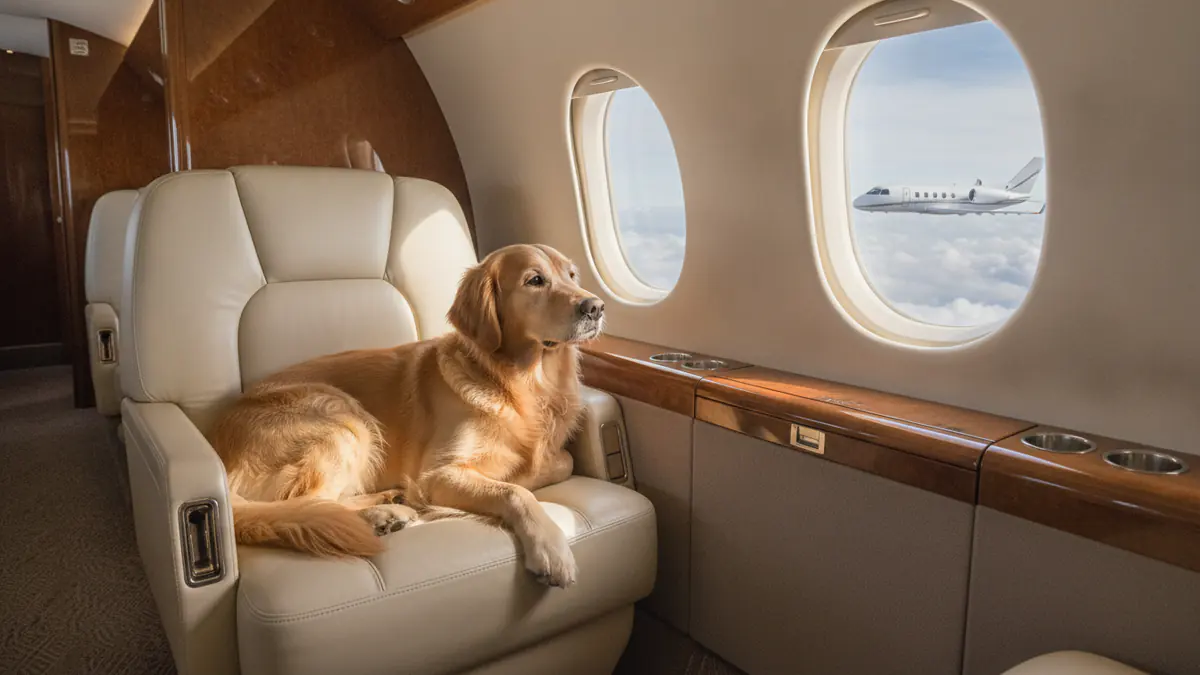
Who it's for
- Owners who don't want pets in an airline hold
- Relocations with animals
- Larger dogs that airlines won't carry in the cabin
How it works
- 1. Tell us the species, size and number of animals when you request a quote.
- 2. A specialist confirms operators whose policy accepts them on the chosen aircraft.
- 3. You arrange the destination's health and entry documents; the specialist can point you to the requirements.
Aircraft that suit it
| Category | Passengers | Longest range in dataset | Per flight hour |
|---|---|---|---|
| Light Jets | 4–7 | 2,040 nm | US$3,500–US$5,000 |
| Midsize Jets | 6–9 | 2,700 nm | US$4,500–US$7,000 |
| Super Midsize Jets | 8–9 | 4,018 nm | US$6,000–US$8,500 |
| Heavy Jets | 10–14 | 5,300 nm | US$8,500–US$13,000 |
Estimate Hourly figures from pricing model market-2026-09. Method.
Example trips
| Route | Aircraft | Time | One way from |
|---|---|---|---|
| Washington, D.C. to New York | Light Jet | 1 h | US$5,500 |
| Palm Beach to New York | Light Jet | 2 h 45 min | US$15,500 |
| Los Angeles to Las Vegas | Light Jet | 1 h | US$5,500 |
| Toronto to New York | Light Jet | 1 h 15 min | US$7,000 |
| San Jose to Los Angeles | Light Jet | 1 h 10 min | US$6,500 |
| Boston to New York | Light Jet | 55 min | US$5,500 |
| New York to Los Angeles | Midsize Jet | 5 h 35 min | US$40,000 |
| Austin to Dallas | Light Jet | 55 min | US$5,500 |
Worth knowing
- Each operator sets its own pet policy; some aircraft interiors exclude animals.
- International trips require the destination country's entry documents, which can take weeks to prepare.
- Some operators charge a cleaning fee.
Pet friendly private jet travel: what makes it different
A pet friendly private jet lets your dog or cat travel in the cabin with you, rather than in a crate in an airline hold or as separate cargo. On most charter flights, a well-behaved pet can sit at your feet or on a blanket beside you, board with you at a private terminal and leave with you on arrival. That is the main reason owners choose private jet pet travel: the animal stays with the people it knows for the whole journey. This page explains how operator pet policies work, what size and number of animals are realistic, the entry documents that decide the timeline for international trips, and how to prepare your pet for the flight.
We are a charter broker. We do not own or operate aircraft. When you tell us about your animals, we only ask for quotes from licensed operators whose policy accepts them on the aircraft proposed, and we pass your requests to the operator so there are no surprises at the steps of the aircraft.
Why owners choose a private jet with pets
- No hold, no cargo. Airlines usually limit cabin pets to small animals in carriers under the seat. Larger dogs travel in the hold or as cargo, if they are accepted at all. On a private jet with pets, the aircraft is yours, so the animal can stay with you.
- Larger dogs. Owners of large breeds are among the most frequent pet charter clients, because they have few other options for travelling together.
- Less stress. Short walks from car to aircraft, a quiet private terminal and familiar people around can make the trip calmer for the animal.
- Relocations. Families moving home, especially internationally, often want the pets to arrive on the same day as the family.
- Several animals. Two dogs and a cat can travel together, subject to the operator's policy and the cabin space.
A pet friendly private jet is still a charter flight, priced per aircraft. Our private jet cost guide explains how that price is built. Bringing a pet does not usually change the price much, but some operators add a cleaning fee.
How operator pet policies work
Each operator sets its own rules, and they can differ by aircraft. That is why the first message about your trip should mention every animal. Common points in operator policies include:
- Which aircraft accept pets. Some aircraft have interiors, such as light-coloured leather or delicate carpets, that the owner has chosen to keep pet-free. Others are designated pet friendly.
- Size and number. Many operators accept one or two animals routinely. Larger numbers or very large dogs may need approval and a larger cabin.
- Species. Dogs and cats are widely accepted. Other animals, such as birds or rabbits, are decided case by case and can be restricted by destination rules.
- In the cabin. Operators usually ask that pets are restrained or kept in a carrier during taxi, take-off, landing and turbulence, and that they do not block exits or aisles. The crew has the final say on safety.
- Behaviour and health. Animals should be calm around strangers, house-trained and healthy enough to fly. Operators may refuse an animal that seems unwell or aggressive.
- Cleaning. Some operators charge a cleaning fee after a flight with pets, especially if extra cleaning is needed.
Service and assistance animals are also subject to the operator's policy on private charter. Tell us about them in the same way.
Choosing the aircraft for private jet pet travel
For short trips with a small dog or cat, most cabin sizes work. As animals get larger or trips longer, the cabin matters more. The table above lists the categories that most often carry pets, with hourly estimates from our demonstration pricing model; our guide to private jet types explains each class.
- Light jets suit a small pet on a short hop. Floor space is limited.
- Midsize and super midsize jets give a large dog room to lie down, and a flat floor helps on longer trips.
- Heavy jets suit several animals or long flights. More floor space and a larger washroom make feeding and cleaning easier.
Flight time matters too. For flights over a few hours, a larger aircraft gives you space to settle the animal, and a nonstop route avoids an extra landing that can be stressful. The directory of charter routes shows typical flight times between cities.
International trips: the documents decide the timeline
The operator decides whether your pet can board. The destination country decides whether it can enter. Entry rules are the part of pet travel that most often catches people out, because some requirements take weeks or months to meet. Start with your vet and the official guidance for your destination as soon as the trip is likely.
Arriving in the European Union
The EU sets common rules for bringing dogs, cats and ferrets into member states. These usually include an identifying microchip, a valid rabies vaccination given after the microchip, and either an EU pet passport or an animal health certificate. Animals coming from some countries also need a rabies antibody blood test and a waiting period before travel. Details and exceptions are on the European Commission's pet movement page.
Arriving in Great Britain
Great Britain has its own rules for pets, separate from the EU's. They cover microchips, rabies vaccination, health documents, tapeworm treatment for dogs from most countries, and rules about which routes and carriers pets may use to enter. Read the GOV.UK guidance on bringing a pet dog, cat or ferret to Great Britain and ask the operator to confirm the arrival airport can process animals.
Arriving in the United States
Rules for dogs entering the United States are set by the CDC and include requirements on age, microchipping and documents, with extra requirements for dogs that have been in countries considered high risk for rabies. See the CDC's page on bringing a dog into the United States. For travel from the US to another country, the USDA's pet travel pages explain how to get export health certificates endorsed.
Other destinations
Some destinations, especially islands and places that are free of rabies, have strict rules that can include long preparation times or quarantine. Treat these as projects that start months ahead. We can point you to the relevant official requirements, but your vet and the destination authority are the ones who confirm the paperwork is correct.
Domestic pet charter flights
Domestic trips are much simpler. There are usually no entry documents, and the main questions are the operator's policy and your animal's comfort. It is still wise to carry proof of vaccinations, a copy of your pet's medical notes, and your vet's contact details, especially if you will stay for a while.
Preparing your pet for the flight
Your vet is the right person to advise on your animal. The following general points help most pets travel well.
- Visit the vet before the trip. Ask about fitness to fly, and whether calming aids are appropriate. Some vets advise against sedation for flying.
- Practise with the carrier or harness. An animal used to its carrier or travel bed will settle faster in an unfamiliar cabin.
- Feed lightly. A light meal a few hours before departure can reduce motion discomfort. Bring water and a bowl.
- Exercise before boarding. A walk near the private terminal helps dogs relax. Ask the FBO where animals may be walked.
- Bring the essentials. Lead, blanket, favourite toy, waste bags, absorbent pads, food and any medication.
- Tell the crew. Let them know your pet's habits, such as nervousness on take-off or barking at strangers.
On the day: airport, cabin and arrival
At the departure airport, you normally use a private terminal run by a fixed-base operator rather than the main passenger terminal. Many are used to animals, and some have grass areas where dogs can be walked before boarding. Security and passport checks happen in the terminal, and your pet goes through with you on a lead or in its carrier. Allow time for the operator or handler to check the animal's documents on international trips before the aircraft leaves; missing paperwork is far easier to fix at home than on arrival.
On board, the crew shows you where the animal should sit or lie during take-off and landing. Once the aircraft is level and the seat belt sign allows, most operators let a calm dog lie beside you or at your feet. Keep water within reach, and avoid feeding a large meal in flight. Cabin pressure changes on the way up and down affect animals as well as people, so a chew or a toy can help some dogs swallow and settle.
On arrival, the process depends on the country. On a domestic flight, you usually walk off the aircraft to your car. On an international flight, border and sometimes veterinary officials check the animal's microchip and documents before it is released. Some airports only accept animals at certain hours or through certain terminals. We confirm those arrangements with the operator before you fly.
Relocating with pets on a private jet
Moving home with animals is one of the most common reasons for a pet charter flight. A relocation usually means more luggage, sometimes several animals, and a destination with entry rules you have not dealt with before. Start with the paperwork, because it sets the earliest possible date. Then choose the aircraft by the combined space needed for people, animals and belongings. If most of your belongings are going by removal company, the flight can be sized for passengers, pets and essential luggage only. For families moving a large household with several pets, a heavy jet or even two aircraft may be the right answer; our page on private jet charter for groups explains how larger parties are planned.
Pets on short-notice trips
If you need to fly at short notice, mention your pet in the first message. It narrows the choice of aircraft, so it has to be part of the first availability check. Our last-minute charter guide explains how short-notice trips work. For international trips, documents are usually the real limit, and they cannot be rushed.
Empty legs with pets
Empty legs are discounted one-way positioning flights. Whether a pet can fly on one depends on that aircraft's policy, like any other charter. See our empty leg flights page. If your plans are fixed, a dedicated charter is more reliable, because empty legs can change or be cancelled.
Checking the operator
Every pet charter must still be flown by a licensed commercial operator. In the UK, the Civil Aviation Authority explains how to check a flight is legal. Every quote we present names the operator and its pet policy for that aircraft.
Book a pet friendly private jet
Tell us your route, dates, passengers and every animal: species, breed, weight and whether it travels in a carrier. We ask only operators whose policy accepts your pets on the aircraft proposed, and present the options side by side with any pet-related fees. You arrange the documents with your vet, and the operator flies the trip. To start, use the quote form on this page, or visit the JetPriceCheck homepage.
Frequently asked questions about flying with pets
Can large dogs fly in the cabin of a private jet?
Often, yes, if the operator accepts them on that aircraft. Larger cabins give a large dog room to lie down. Give us the dog's weight and size when you ask for a quote.
Does my pet need a seat of its own?
Usually not. Pets normally sit on the floor or on a blanket. The operator may require a carrier or harness during take-off and landing.
Is there an extra charge for bringing a pet?
Some operators charge a cleaning fee. Others do not. Any pet fee should be shown on the quote.
How far in advance should I prepare documents for international pet travel?
As early as possible. Some destinations need a blood test and a waiting period that can take months. Check with your vet and the official guidance for your destination.
Can I fly with a cat as well as a dog?
Usually, if the operator accepts both and the cabin has room. Cats generally travel in a carrier.
Can I bring my pet on a business trip?
Yes, on the same terms as any charter. Mention the animal in the booking so the operator can confirm the aircraft. Our corporate charter page covers business itineraries.
Questions
Can my dog sit in the cabin on a private jet?
Usually yes, if the operator accepts pets on that aircraft. Tell us when you ask for a quote so we only return operators that do.