Guide
Security, passports and customs on private jets
What security screening, passport checks and customs look like when you fly private, at home and abroad.
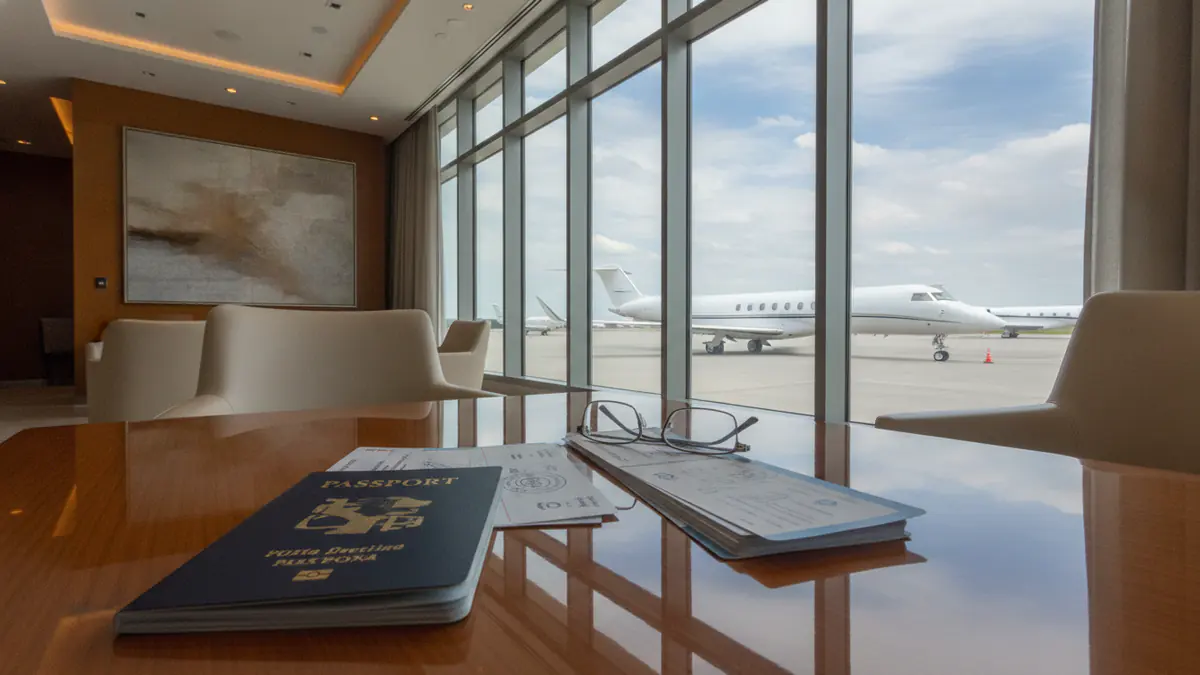
Do you need a passport on a private jet? The short answer
Do you need a passport on a private jet? For any flight that crosses an international border, yes: a private jet changes how you travel, not the laws of the countries you leave and enter. You need the same passport, visa or travel authorisation you would need on an airline, and you clear immigration and customs on arrival. For a domestic flight you usually need a valid government-issued photo ID rather than a passport, and the security process is far lighter than at an airline checkpoint.
That short answer hides a lot of useful detail. Where do the passport checks happen? Do you go through TSA on a private jet? What happens to your bags at customs, and who files the paperwork? This guide walks through the process at home and abroad, so you know what to carry and what to expect on the day.
We are a charter broker, not an airline or aircraft operator. We arrange flights with licensed operators and help clients prepare their documents, and you can see how we work on the JetPriceCheck homepage. The rules below are general; your operator will confirm what applies to your specific trip.
Why private jet security feels different
Most people picture airport security as queues, trays, body scanners and a liquids limit. That process exists because airlines carry large numbers of passengers who do not know each other, so every traveller is screened to the same standard.
A private charter is different in three ways that shape private jet security:
- You know everyone on board. The passenger list is your own group, and the operator knows who each person is before the flight.
- You depart from a private terminal. Most private flights use a fixed-base operator, or FBO, a separate building on the airfield with its own entrance and ramp access. Our guide to what an FBO is explains how these terminals work.
- The rules scale with the aircraft. Security requirements for charter are generally tied to the size and weight of the aircraft, so a small jet and a converted airliner are treated differently.
None of this means private flights are unregulated. The operator is responsible for knowing who is on board, checking identity, and following the security programme that applies to its aircraft. The process is simply designed around a known group rather than a crowd.
Do you go through TSA on a private jet?
For most on-demand charter flights in the United States, you do not pass through a TSA airline checkpoint. You arrive at the FBO, the operator or its handling agent checks your identity against the passenger manifest, and you walk or are driven to the aircraft.
That does not mean there is no screening at all. US security rules in 49 CFR Part 1544 require charter operators of larger aircraft to follow TSA-approved security programmes. Operators of aircraft above 12,500 pounds maximum take-off weight typically follow what is known as the Twelve-Five Standard Security Program, which includes identity checks and measures set by the operator's programme. The largest charter aircraft, such as converted airliners, fall under stricter programmes that can involve full screening of passengers and bags, sometimes by TSA officers or contracted screeners.
In practice this means:
- Light jets and turboprops: identity verification and a crew briefing, with little else.
- Midsize to heavy business jets: identity checks against the manifest, and whatever further measures the operator's security programme requires.
- Airliner-size charters: a screening process closer to what you know from airlines.
Whatever the aircraft, bring a valid government-issued photo ID for every adult passenger. The operator may refuse boarding if a passenger cannot be identified. Our guide to private jet sizes explains where each aircraft class sits on the weight scale.
What about liquids, bags and prohibited items?
Because there is often no airline checkpoint, you will not usually be asked to separate liquids into a small bag. That does not make everything allowed on board. Dangerous goods rules still apply: spare lithium batteries, flammable items, compressed gases and similar articles are restricted, and firearms need to be declared in advance and carried under the operator's procedures and the laws of every country on the trip. Tell us about anything unusual when you book, and we will check it with the operator before the day.
Domestic private flights: what ID do you need?
On a domestic flight within one country, you generally need the same kind of photo ID you would show for an airline flight, and in some cases even less formality. In the United States, a driver's licence or other government photo ID is normally what operators ask for. Children travelling with parents are usually covered by the adults' identification, although operators may ask for a birth certificate or other proof of age for minors, particularly if only one parent is travelling.
Some domestic trips look international but are not. US citizens flying between the mainland and US territories such as Puerto Rico or the US Virgin Islands generally do not need a passport, according to the US State Department's passport guidance, though a valid ID is still required and customs checks can apply on some legs. Non-US citizens should check their own status before travelling.
In Europe the picture is similar. A flight within one country needs photo ID. A flight between two countries inside the Schengen Area has no routine border control, as the European Commission's Schengen pages explain, but operators still verify identity and some countries expect you to carry a passport or national identity card. Treat a passport or national ID card as essential on any intra-European trip.
International private flights: passports, visas and the manifest
Once a private flight crosses a border, the answer to "do you need a passport to fly privately" becomes a firm yes. Every passenger needs a valid passport, plus any visa or electronic travel authorisation the destination requires, exactly as on a commercial flight. Some countries also require passports to be valid for a set period beyond your stay, and some check for blank pages, so check the destination's rules well before departure.
What changes is the paperwork behind the scenes. Before an international private flight, the operator sends passenger and crew details to the border authorities in advance. That is why operators ask for passport scans or passport details at the time of booking, and why late changes to the passenger list can delay a departure.
- Leaving or entering the United States: private aircraft operators file an advance manifest through CBP's eAPIS system and must arrive at an airport where customs is available, as CBP's private flyers pages set out. Some airports need prior permission or have limited customs hours.
- Flights to and from the UK: general aviation flights crossing the UK border generally need an advance report to Border Force, known as a General Aviation Report, as described on GOV.UK.
- Canada: the Canada Border Services Agency runs its own reporting rules for private aircraft, and arrivals must use an airport with customs services.
- Schengen entry and exit: flights from outside the Schengen Area must arrive at an airport with a border crossing point, where passports are checked.
We and the operator handle these submissions with you, but the details must match the passport each person will carry. A mismatch between the manifest and the document on the day can hold up the flight.
Private jet customs: what arrival looks like
Private jet customs is where the private experience shows most clearly. Rather than joining a long immigration hall, you usually clear formalities in a small area of the FBO or in a dedicated general aviation facility.
At a typical arrival:
- The aircraft parks on the business aviation ramp. In some places officers meet the aircraft; in others you walk to the FBO, where immigration and customs have a desk or office.
- Officers check passports against the manifest. Each passenger presents their passport and any visa. Questions are the same as on an airline arrival: purpose of visit, length of stay, where you are staying.
- Bags may be inspected. Customs officers have the same powers as at an airline terminal. Declare items as the destination's rules require, including large amounts of cash, goods over the duty-free allowance, food and plants, pets and firearms.
- You leave with your luggage. Because your bags travelled with you, there is no carousel.
When everything is in order, clearing customs at a private terminal is usually quick. It depends on officers being available, which is why arrival times at smaller airports may need to fit around customs opening hours, and why an unplanned arrival outside those hours can mean a diversion. Operators build this into the flight plan, and it is one of the reasons the arrival airport matters when you choose a route. Our directory of charter routes shows the airports we typically use on popular corridors.
Pets, medication and special items
Pets travelling across borders need the destination's paperwork, such as health certificates, vaccination records and sometimes microchip and import permits. Prescription medication should be carried in its original packaging with a copy of the prescription, especially controlled medicines, which some countries restrict. High-value items such as jewellery, watches or equipment you are taking abroad and bringing back may be worth documenting before you leave, to avoid questions on return.
Common mistakes that delay private flights
Even with a private jet, paperwork problems are the most common reason a smooth trip turns into a stressful one. These are the issues we see most often:
- A passport that expires too soon. Many countries require a period of validity beyond your stay.
- Missing visas or travel authorisations. Flying privately does not waive a visa requirement or an electronic authorisation.
- Late passenger changes. Adding a guest on the morning of departure means updating the manifest, which can take time.
- Different names on the booking and the passport. Use the name exactly as it appears in the passport.
- Children without supporting documents. Where one parent travels alone with a child, some countries expect a consent letter from the other parent.
- Assuming a domestic-looking trip needs no documents. Flights to islands, territories or neighbouring countries can still involve border formalities.
How to prepare for private jet security and customs
A short checklist covers almost every trip:
- Send passport details early. Full name, nationality, date of birth, passport number and expiry, for every passenger.
- Check entry rules for every country on the trip, including any stopover country if the aircraft refuels with passengers on board.
- Carry the physical documents. The passport must be with the passenger, not in a checked bag or at home.
- Declare special items in advance: pets, firearms, sports equipment with batteries or gas, large amounts of cash, and medication that may be controlled abroad.
- Confirm the arrival airport's customs arrangements if your flight lands late in the evening or at a smaller airfield.
- Arrive a little early at the FBO for an international flight, so identity checks and any exit formalities are relaxed.
If you are planning a trip and want these details handled with you, request a quote through JetPriceCheck and we will include a document checklist for the route. For a sense of what the flight itself might cost, our private jet cost guide explains how estimates are built, and our guide to what a charter flight is explains who operates the aircraft and holds responsibility for these checks.
What a private jet does not change
It helps to be clear about what flying privately does not do. It does not remove the need for a passport or visa. It does not let you skip customs or bring in goods you would otherwise declare. It does not let you land at any airport you like from abroad: international arrivals must use airports with border services. And it does not stop an operator or border officer from refusing boarding or entry when documents are missing.
What it does change is the experience. You clear formalities in a quieter place, alongside only your own group, with the operator's staff and handling agent helping you through. For many travellers, that calm arrival is as much a reason to fly private as the flight itself.
FAQ: passports, security and customs on private jets
Do you still go through TSA on a private jet?
Usually not at an airline checkpoint. Most US charter passengers show photo ID at the FBO, and the operator follows the TSA security programme for its aircraft size. Airliner-size charters can involve full screening.
Do you need a passport on a private jet for domestic flights?
No. For flights within one country you normally need a valid government-issued photo ID. Some operators and countries still recommend carrying a passport, especially within Europe.
Do you need a passport to fly privately to another country?
Yes. Every passenger needs a valid passport and any visa or travel authorisation the destination requires, the same as on a commercial flight. The operator also files passenger details with border authorities in advance.
Where do you go through customs on a private jet?
At the arrival airport, usually in the FBO or a general aviation customs facility, and sometimes planeside. The flight must land at an airport with customs and immigration services.
Can you bring liquids on a private jet?
Usually there is no airline-style liquids limit, but dangerous goods rules still apply and the operator has the final say. Declare anything unusual when you book.