Guide
Private Jet Catering: How Food on a Private Flight Works
What food on a private jet involves: who supplies it, how to order, lead times, dietary requests and what it costs on a charter.
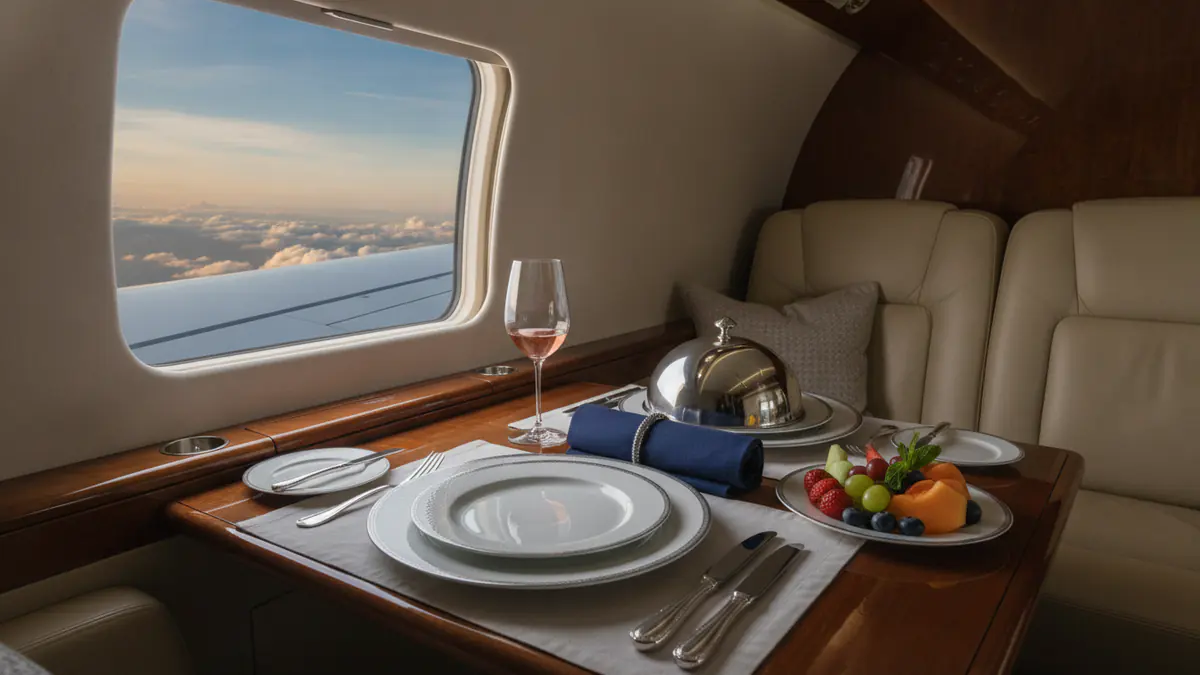
What private jet catering actually is
Private jet catering is the food and drink loaded onto a chartered aircraft for your flight, ordered to your taste rather than taken from a fixed airline menu. On most charters it is prepared by a specialist inflight caterer or a restaurant near the departure airport, collected by the operator or the handling agent, and stowed in the aircraft's galley shortly before you board. Nothing about it is automatic: what you eat depends on what you ask for, how much notice you give, the size of the aircraft and whether there is a cabin attendant on board to serve it.
That flexibility is one of the pleasures of flying privately, and it is also where expectations and reality sometimes part. A light jet on a one-hour hop has no oven and no attendant, so a hot three-course dinner is not on the cards. A heavy jet crossing the Atlantic can serve a proper meal on real crockery. This guide explains who supplies private jet food, how to order it, the lead times that matter, how dietary requests are handled and how catering shows up on a charter bill. We are a charter broker: we arrange flights with licensed operators, and the operator's crew and caterers look after the food. You can read more about how we work on the JetPriceCheck homepage.
Who prepares private jet food
There are three common sources of catering on a private jet, and the right one depends on the airport and the trip.
Specialist inflight caterers
At busy business aviation airports, dedicated inflight caterers prepare food designed to travel: dishes that hold their texture after chilling, portions packed for small galleys and presentation that survives being carried across an apron. They are used to working to departure times, labelling allergens and packing meals so a cabin attendant can plate and reheat them. This is the default for most longer flights.
Restaurants and local suppliers
Some passengers want a particular restaurant's food, and many operators will arrange a collection. It can work well for cold dishes, sushi, sandwiches and desserts. It is less reliable for anything that must be reheated, because restaurant food is not usually prepared with a galley oven in mind. The operator may also have rules about where food comes from, so ask before you order direct.
The operator's own standard provisions
Almost every charter includes a basic stock of soft drinks, water, coffee, tea and light snacks. On short flights in smaller aircraft, that may be all you need. Treat it as a baseline rather than a meal: what is included varies between operators, and a quote should tell you what is standard.
Behind all of this sits the ground handler or fixed-base operator at the airport, which often receives deliveries, keeps food chilled and hands it to the crew. Long-haul meal services on scheduled airlines grew out of the same logistics, and the history of the airline meal explains why food for flying is prepared so differently from restaurant food.
How to order catering on a private jet
Ordering catering on a private jet is simple if you treat it like any other part of the booking.
- Tell us early. When you ask for a quote, mention how many passengers will eat, the time of day and whether you want a full meal, light bites or just drinks. That lets the operator check the galley and crew before you commit.
- Choose from a caterer's menu or describe what you want. Most caterers publish a private jet menu with breakfast, lunch, dinner and platter options. You can also describe dishes in your own words and let the caterer propose something that travels well.
- Confirm quantities per person. Order per passenger and add a little extra on long flights. Leftovers can often be taken with you.
- Flag every dietary need. Allergies, religious requirements, children's meals and preferences all go in writing, with the passenger's name against each one.
- Confirm the final order in writing. The operator or its handler places the order with the caterer. You should receive a confirmation that lists what is coming.
For trips arranged at short notice, see our last-minute private jet page: catering is still possible on many same-day flights, but the choice narrows.
Lead times for private jet catering
Lead time is the single biggest factor in what you can get.
- Around 48 hours or more gives the caterer time to source specific ingredients, prepare special diets and produce a full plated menu.
- Around 24 hours is usually enough for a standard menu at a busy airport.
- Same day often limits you to what the caterer has ready, platters, or food bought from a supplier near the airport.
These are general patterns rather than rules. Weekends, public holidays, early departures and smaller airports all tighten the window. If you change passenger numbers, update the catering at the same time, because the order is usually placed per head.
What you can realistically eat on each size of aircraft
The aircraft decides the menu as much as the caterer does. Our private jet sizes guide covers the categories in detail; for food, the differences look like this.
Turboprops and light jets
Small cabins usually have a refreshment centre rather than a full galley: an ice drawer, a place for drinks and room for a few boxed meals. There is typically no cabin attendant, so food is served cold or at room temperature and passengers help themselves. Good choices are salads, sandwiches, wraps, fruit, cheese and desserts. On flights of an hour or two that is rarely a hardship.
Midsize and super midsize jets
Larger cabins often have a galley with more storage and, on many aircraft, a microwave or oven. Some flights carry a cabin attendant, especially longer ones. That opens up warm breakfasts, simple hot dishes and a more composed meal. Ask whether an attendant is included, because it changes what the crew can serve.
Heavy and ultra long range jets
On large cabin aircraft, a full galley and a cabin attendant are common. Multi-course meals, hot food, bread warmed on board and proper tableware are all possible. On overnight flights you can plan a dinner service and a breakfast before landing, and the attendant can time it around your sleep. Our private jet interior guide shows how galleys and dining areas fit into these cabins.
Dietary requests, allergies and special meals
Catering on a private jet is well suited to special diets because the food is ordered for named passengers rather than a whole aircraft.
- Allergies. State each allergy in writing, with severity. Caterers label allergens, but a private jet cabin is a shared space and neither the caterer nor the operator can promise it is free of a given allergen. Passengers with severe allergies should carry their own medication and consider bringing food they trust.
- Religious requirements. Kosher and halal meals can usually be arranged from certified suppliers at larger airports, given enough notice. Ask for confirmation of the certification when the order is placed.
- Vegetarian, vegan, gluten-free and low-sugar meals are routine for inflight caterers, but they still need to be requested in advance.
- Children and infants. Say how old the children are and what they eat. Simple food they already like usually works better than an elaborate menu.
- Pets. If you are flying with animals, tell the operator about any food or water they need on board. Our pet-friendly private jet page covers the rest of the preparation.
Drinks, wine and bringing your own
A standard charter usually includes soft drinks, water, coffee and tea. Wine, champagne and spirits are normally ordered as part of the catering, or supplied from the operator's stock and billed. Some operators allow passengers to bring their own bottles; others do not, or require the crew to serve anything brought on board. Ask before you pack.
Crossing a border adds another layer. Customs rules apply to food and alcohol on private flights just as they do on airlines. Many countries restrict meat, dairy, fruit and plant products, and leftover catering may have to be disposed of on arrival rather than carried off the aircraft. For flights into the United States, U.S. Customs and Border Protection lists prohibited and restricted items, including agricultural products. Other countries publish their own rules. Our guide to security and passports on private flights explains the rest of the arrival process.
What private jet catering costs on a charter
Catering is not usually included in the hourly rate. It is billed as a separate line, commonly at the caterer's price plus a handling or delivery charge, and it varies widely with the airport, the menu and the lead time. A tray of sandwiches for four and a full dinner service for twelve on a long flight are very different bills.
We do not publish catering prices, because they change by supplier and by order. What we can do is show catering as its own line on a quote, so you can see it separately from the flight. The flight itself is the larger number: our private jet cost guide explains how estimates are built from flight time and aircraft size, and the methodology page sets out the pricing model behind them and the published market rates it draws on.
A few habits keep private jet food costs sensible:
- Order for the flight you are taking. A light breakfast on a 90-minute flight does not need a caterer's full hot menu.
- Avoid last-minute changes. Late orders and changes can carry extra charges, and some items cannot be cancelled once prepared.
- Ask what is standard. If the operator's included snacks are enough, you may not need extra catering at all.
- Consider restaurant platters for short trips. Cold food from a good local supplier can travel well on a small jet.
Planning catering for groups and events
Catering for a group is mostly about quantities and timing. For a team or a family on a larger aircraft, a mix of shared platters and a few individual hot dishes often works better than identical plated meals. Sports teams and touring crews usually have specific nutrition plans, and caterers can work to them if they receive the plan in time. Our sports team charter page and group private jet charter page cover the flights themselves.
For business trips, think about when the meeting will happen. If the team will work on board, lighter food and plenty of coffee may be more useful than a long lunch. Our corporate jet charter page describes how these trips are usually planned.
A simple catering checklist
Before you fly, confirm these points with the operator through us:
- Number of passengers eating, and any children.
- The meal or meals you want, and at what point in the flight.
- Every allergy and dietary need, in writing, with names.
- Drinks, including any alcohol, and whether you may bring your own.
- Whether there is a cabin attendant and what the galley can heat.
- What is included as standard, and how extra catering will be billed.
- Any customs issues if the flight crosses a border.
Once those are answered, catering on a private jet is usually the easiest part of the trip. When you are ready, ask us for a quote from the JetPriceCheck homepage and mention your catering needs with the flight details.
Private jet catering FAQ
Is food included on a private jet charter?
Most charters include basic drinks and light snacks. Meals are usually ordered as extra catering and billed as a separate line on the quote, so ask what is standard before you order.
How far in advance should I order private jet catering?
Around 24 hours is often enough for a standard menu at a busy airport, and around 48 hours gives time for special diets and specific requests. Same-day orders are possible but the choice is narrower.
Can I bring my own food on a private jet?
Often yes, but it depends on the operator. Customs rules still apply on international flights, so food that is restricted at your destination may have to be left behind or disposed of on arrival.
Can I get hot meals on a small private jet?
Usually not. Light jets and turboprops rarely have an oven or a cabin attendant, so food is served cold. Hot meals are more realistic on midsize and larger jets with a galley.
Can a private jet caterer handle allergies?
Caterers can label allergens and prepare meals without specific ingredients, but no one can promise an allergen-free cabin. Give every allergy in writing and carry any medication you need.