Light Jet
Pilatus PC-24 charter
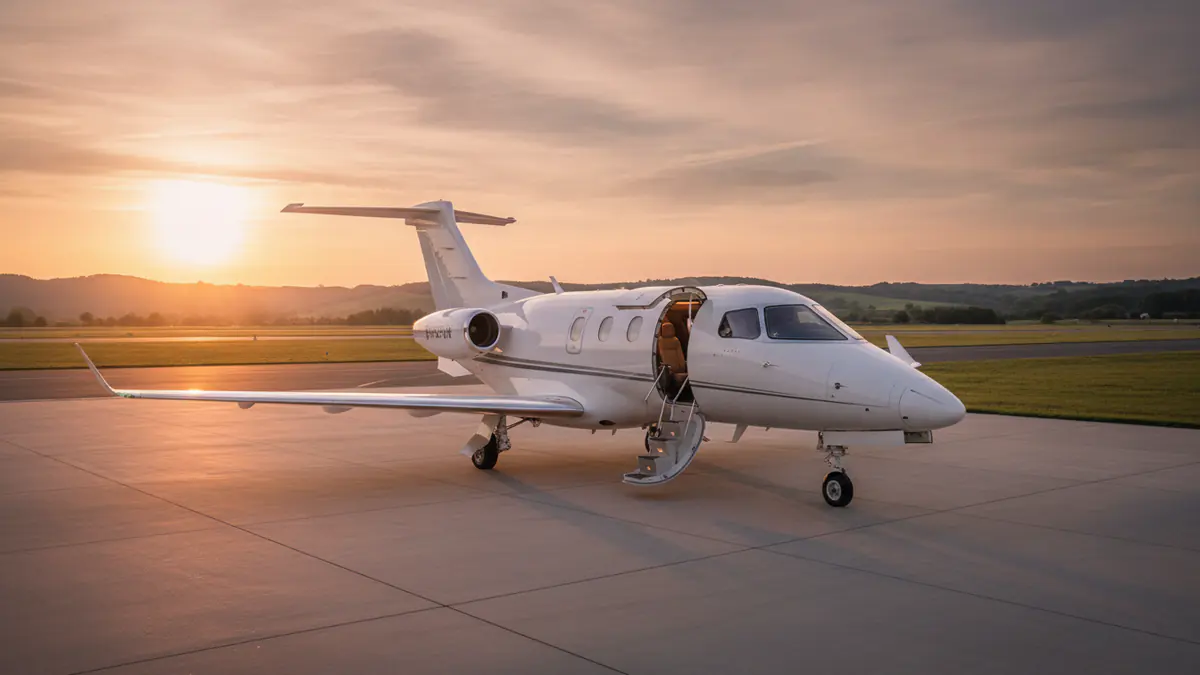
The Pilatus PC-24 is a light jet built by Pilatus Aircraft with a published range of about 2,000 nm, typically carrying 6–8 passengers.
Unverified Specifications source: Pilatus PC-24 technical data (pilatus-aircraft.com) (https://www.pilatus-aircraft.com/en/pc-24/technical-data); Pilatus PC-24 overview (pilatus-aircraft.com) (https://www.pilatus-aircraft.com/en/fly/pc-24)
- Range
- 2,000 nm
- published, not practical
- Cruise
- 440 kt
- Passengers
- 6–8
- max 10 certified
- Cabin (H × W × L)
- 5.1 × 5.6 × 23 ft
- Baggage
- 90 cu ft
- In production
- Yes
Where the Pilatus PC-24 can fly nonstop
Screened against our route set with a practical-range margin.
Of 104 city pairs we cover, the Pilatus PC-24 can typically fly 74 nonstop.
| Route | Distance | Range |
|---|---|---|
| New York – Dubai | 5,951 nm | Fuel stop likely |
| London – Los Angeles | 4,718 nm | Fuel stop likely |
| Geneva – Aspen | 4,543 nm | Fuel stop likely |
| New York – São Paulo | 4,162 nm | Fuel stop likely |
| London – Aspen | 4,140 nm | Fuel stop likely |
| Hong Kong – Sydney | 3,993 nm | Fuel stop likely |
| London – Miami | 3,823 nm | Fuel stop likely |
| Nice – New York | 3,464 nm | Fuel stop likely |
| Geneva – New York | 3,352 nm | Fuel stop likely |
| London – Washington, D.C. | 3,179 nm | Fuel stop likely |
Pilatus PC-24 charter cost
Charter pricing for light jets in our model runs US$3,500–US$5,000 per flight hour Estimate. Individual aircraft vary with age, interior, operator and base. This is the cost to charter, not to buy.
Miami to Cabo San Lucas: about 4 h 20 min, US$24,500–US$35,000 one way.
Miami to Aspen: about 4 h 15 min, US$23,500–US$33,500 one way.
New York to Aspen: about 4 h 5 min, US$23,000–US$32,500 one way.
Other light jets
| Aircraft | Range | Passengers | Baggage |
|---|---|---|---|
| HondaJet Elite II | 1,547 nm | 4–5 | — |
| Pilatus PC-24 | 2,000 nm | 6–8 | 90 cu ft |
| Embraer Phenom 300E | 2,010 nm | 6–7 | 84 cu ft |
| Bombardier Learjet 75 | 2,040 nm | 6–7 | — |
The Pilatus PC-24 in brief
The Pilatus PC-24 is the light jet that behaves like a much bigger aircraft on the ground. Built in Switzerland, it offers the roomiest cabin and the largest published baggage hold of the four light jets in our dataset, and it can use shorter runways than most jets its size. For charter clients, that makes it a natural choice for families with luggage, ski and island trips to smaller airports, and anyone who wants light-jet pricing without feeling cramped.
The facts strip, nonstop table, cost section and peer table above come from our dataset: published manufacturer or public figures, not independently verified. The sections below explain what they mean for a real booking, including where the PC-24 is the obvious pick and where a faster jet makes more sense.
JetPriceCheck is a charter broker. We do not own or operate the PC-24 or any other aircraft. We ask licensed operators for suitable aircraft, compare the options, and look after the booking until you land. You can read more about how we work on the JetPriceCheck homepage.
What makes the PC-24 different
Pilatus Aircraft is based in Stans, in central Switzerland, and was best known for turboprops before it built a jet, as the Pilatus Aircraft entry on Wikipedia describes. Its single-engine PC-12 became a workhorse on short, rough and remote airfields. The PC-24 was designed to carry that ability into a twin-engine jet. Pilatus calls it the "Super Versatile Jet", and the name explains the idea: one aircraft that can fly business trips, carry bulky cargo and land on runways that most jets avoid.
The PC-24 first flew in 2015 and entered service around the turn of 2018, according to the Pilatus PC-24 article. Several design features matter directly for charter clients:
- Short and unpaved runways. The PC-24 is designed to operate from shorter runways than most light jets and has been approved for some unpaved surfaces such as gravel and grass. Whether a specific operator is approved to use an unpaved strip is a separate question, and many are not, so we treat this as a bonus to confirm rather than a given.
- A large cargo door. A wide door at the back of the cabin, listed on the Pilatus PC-24 product page, makes loading bulky items much easier than through a standard airstair door.
- A flat-floor cabin. No dropped aisle, which makes the cabin feel wider and makes it easier to change the layout.
- Baggage you can reach in flight. The main baggage area sits at the back of the cabin, so a bag can be reached during the trip.
The aircraft's versatility shows in who flies it. Beyond private and charter use, the Royal Flying Doctor Service of Australia operates PC-24s as air ambulances on long remote routes. For you, it means the aircraft was designed to work hard in difficult places, not only between big city airports.
Pilatus PC-24 range and speed
Our facts strip shows a range of about 2,000 nautical miles and a cruise of about 440 knots true airspeed. The range is close to the Phenom 300E and the Learjet 75; the cruise speed is a little lower, which adds a few minutes on a two-hour trip but rarely more. Published range assumes a set load, still air and standard reserves; real trips add winds, weather and each operator's fuel policy, so our screening applies a practical margin. The private jet range guide explains how.
Where the PC-24 flies nonstop
Our fact pack screens 74 of the corridors we cover as nonstop for the Pilatus PC-24. These are screening estimates, not operating promises:
- North America: New York to Washington, D.C., Boston, Philadelphia, Nantucket, Chicago, Toronto, Palm Beach, Miami and Aspen; Los Angeles to San Francisco, San Diego, Las Vegas, Phoenix, Seattle, Vancouver, Dallas and Aspen; Denver to Aspen and Los Angeles; Dallas to Houston, Austin and Las Vegas; Miami to Orlando, Atlanta and Aspen.
- Caribbean and Mexico: Miami and New York to Nassau and Cancún; Los Angeles and Miami to Cabo San Lucas.
- Europe: London to Paris, Geneva, Nice, Milan, Madrid and Ibiza; Paris to Nice, Geneva, Milan and Ibiza; Munich, Zurich and Vienna links; Geneva to Olbia; Madrid to Marrakech; Barcelona to Madrid and Ibiza.
- Middle East and Asia-Pacific: Dubai to Riyadh, Jeddah, Doha and Mumbai; Riyadh to Jeddah, Doha and Abu Dhabi; Singapore to Hong Kong and Bali; Melbourne to Sydney.
Compared with the Learjet 75, only Dubai to Istanbul and Dubai to Malé drop out of the PC-24's list; both are at the edge of light-jet range. The coast-to-coast trip from New York to Los Angeles is not on it: for that, a midsize jet or larger is needed.
Mountain and island airports
The PC-24's list includes several destinations where airport access matters as much as range: Aspen, Nantucket, Olbia and Ibiza among them. Mountain airports come with high elevation, hot summer afternoons and, in Aspen's case, demanding approaches, all of which reduce what any aircraft can carry on a given day. The PC-24's short-field design gives it more room to work with, but airport suitability is always confirmed with the operator for your date, load and conditions.
Inside the PC-24: cabin and baggage
This is where the PC-24 pulls clearly ahead of its light-jet rivals.
Size. Our dataset lists a cabin about 5.1 feet tall, 5.6 feet wide and 23 feet long: the tallest and widest of the four light jets we track, and the longest of those with a published length. Most adults still stoop slightly to move around, but the extra width and length change how the cabin feels on a two- or three-hour trip.
Seats. A typical charter layout has six to eight passenger seats, often a four-seat club section with further seats behind. Our dataset lists six to eight passengers as a comfortable load and a maximum of ten. In practice, six adults travel in real comfort and eight is reasonable on shorter trips.
Layout flexibility. The flat floor and long cabin allow a range of interiors, from executive club seating to layouts with more room for luggage or equipment. Interiors vary a lot between airframes, so we show you the actual layout of the aircraft offered.
Lavatory and refreshments. Most charter PC-24s have an enclosed lavatory and a refreshment area for cold drinks and snacks loaded to order. Confirm both for the specific aircraft.
Connectivity. Wi-Fi depends on the operator and the airframe; ask us if you need it.
Baggage: the PC-24's strongest argument
Our dataset lists about 90 cubic feet of baggage space, the most of any light jet we track with a published figure (against about 84 for the Phenom 300E; our sources give none for the HondaJet Elite II or the Learjet 75). Combined with the large cargo door, that makes the PC-24 the light jet to ask about first when the trip involves:
- skis, snowboards and boot bags;
- golf clubs for a whole group;
- a family's holiday luggage, including pushchairs;
- film, sports or event equipment.
Very long or heavy items still need checking with the operator, because weight and balance limits apply, but the PC-24 turns many "that won't fit" conversations into "that's fine".
Who a Pilatus PC-24 charter suits
It is a strong fit for:
- Families and groups of five to seven with luggage. More room for people and bags than any other light jet in our dataset.
- Ski trips. Aspen and alpine destinations, with space for equipment.
- Islands and smaller airports. Nantucket, Ibiza, Olbia and similar, where short-runway ability widens the options.
- Travellers who want space without a midsize price. It sits in the light-jet cost band while offering a cabin closer to the next size up.
It is a weaker fit for:
- Speed-first trips. The Learjet 75 and Phenom 300E cruise faster.
- Trips over about three and a half hours. A midsize or super midsize jet flies further nonstop and has a stand-up cabin.
- Markets with few PC-24s. The fleet is growing but smaller than the Phenom 300E fleet, so in some regions positioning costs more.
Crew
The PC-24 is certified for single-pilot operation, according to Pilatus. Charter crewing is set by the operator and its regulator; many commercial operators use two pilots. If crewing matters, we confirm it with the operator in writing.
Pilatus PC-24 cost: charter estimates and purchase questions
Searches for "pilatus pc-24 price" and "pilatus pc 24 cost" often come from people thinking about buying one. We are a charter broker and do not sell aircraft; for new-aircraft pricing, speak to Pilatus or its authorised centres. On this page, cost means the cost of chartering one.
The cost section above uses our pricing model for light jets, which follows published market rates: USD 3,500–5,000 per flight hour. As an illustration, a trip with about two hours of flying comes to roughly USD 7,000–10,000 in flight time at those rates, before any other charges. These are estimates, not quotes and not offers; only a licensed operator's quote for a specific aircraft and date is firm. Our private jet cost guide explains how the ranges are built.
The main factors behind a PC-24 quote:
- Positioning. With a smaller fleet than some rivals, the nearest aircraft may be further away.
- Trip shape. A same-day return costs well under twice a one-way, because the aircraft waits for you.
- Overnight stays. Crew hotels and parking are added when the aircraft stays with you.
- Airport fees. Ski-season and island airports can be expensive at peak times.
- Season and demand. Winter holidays and summer weekends fill up early.
Flexible travellers can watch for one-way positioning flights on our empty leg flights page.
PC-24 vs Phenom 300E, Learjet 75 and HondaJet
The peer table above compares all four light jets in our dataset. In short:
- PC-24 vs Embraer Phenom 300E: the Phenom is a little faster and more widely available. The PC-24 has the bigger cabin, the bigger hold and better short-runway access. Choose by luggage and airport.
- PC-24 vs Learjet 75: the Learjet is the speed choice and reaches slightly further. The PC-24 wins on room, bags and runway flexibility.
- PC-24 vs HondaJet Elite II: the HondaJet suits two to four passengers on short trips at a lower price point. The PC-24 is the answer when the group or the bags grow.
For the wider picture, see the light jet charter guide and the full aircraft guide.
How we arrange a PC-24 charter
- Share the trip. Dates, airports, passengers and, especially for the PC-24, a description of the luggage and any equipment.
- We ask licensed operators. We look for PC-24s near your departure airport, plus alternatives if they make better sense.
- Compare options. We show the aircraft, its layout, what the price includes and any positioning or overnight costs.
- Book on the operator's terms. The operator is responsible for the flight; we coordinate.
- We stay with the trip. Weather, airport limits and changing plans are handled with the operator.
Browse the private jet routes directory for estimates and flight times, or request a quote from JetPriceCheck.
Pilatus PC-24 FAQ
How many passengers does a Pilatus PC-24 carry?
Our dataset lists six to eight passengers as a comfortable load and a maximum of ten. Six adults travel in real comfort on longer trips.
What is the range of the Pilatus PC-24?
About 2,000 nautical miles in our dataset. Our screening flags 74 corridors as nonstop, from New York to Aspen to Singapore to Hong Kong, as estimates to confirm with the operator.
Can the PC-24 land on grass or gravel?
The design is approved for some unpaved runways, but each operator needs its own approval and many charter operators do not hold it. We confirm what is possible for your airport.
How much does it cost to charter a light jet like the PC-24?
Our pricing model estimates USD 3,500–5,000 per flight hour for light jets, based on published market rates. Positioning, trip shape, fees and dates change the final price; only an operator's quote is firm.
Is the Pilatus PC-24 a good choice for a ski trip?
Often, yes. It has the largest published baggage figure of the light jets we track and a large cargo door for skis and boot bags, and its short-field ability helps at mountain airports. Airport limits are confirmed for your date.