Heavy Jet
Gulfstream G500 charter
The Gulfstream G500 is a heavy jet built by Gulfstream Aerospace with a published range of about 5,300 nm, typically carrying 12–14 passengers.
Unverified Specifications source: Gulfstream G500 specifications (gulfstream.com) (https://www.gulfstream.com/en/aircraft/gulfstream-g500/); Gulfstream G500 specifications (gulfstream.com), current aircraft lineup (https://www.gulfstream.com/en/aircraft/gulfstream-g500/)
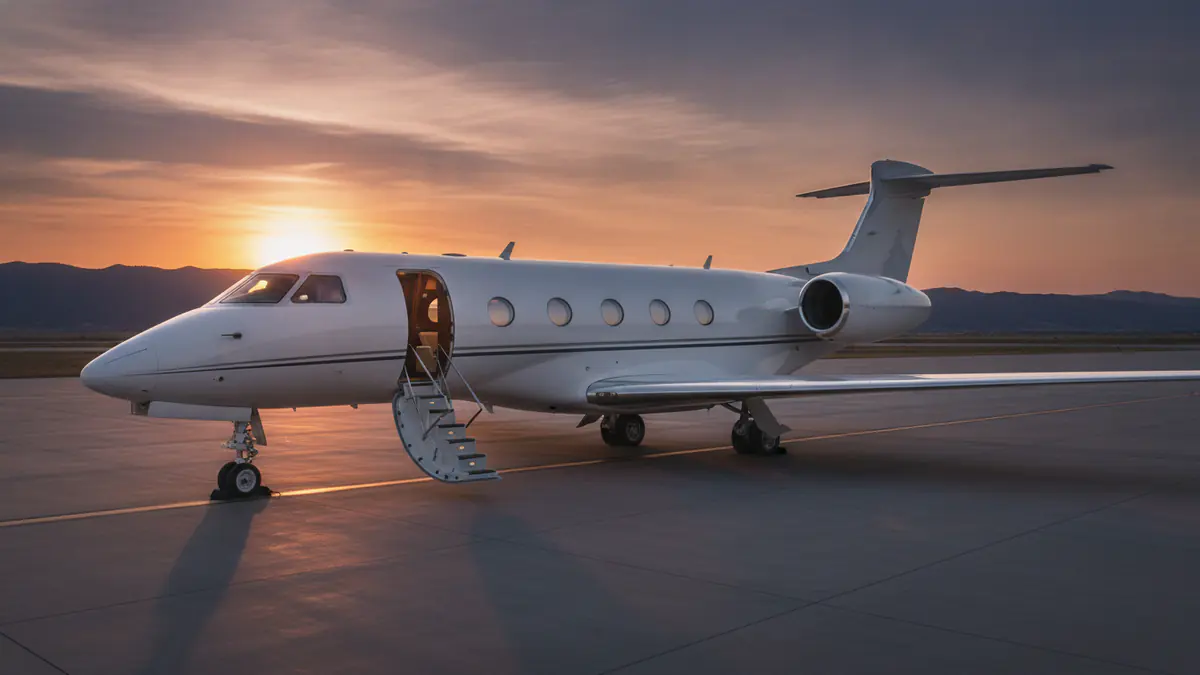
- Range
- 5,300 nm
- published, not practical
- Cruise
- Not yet verified
- Passengers
- 12–14
- max 19 certified
- Cabin (H × W × L)
- 6.2 × 7.6 × 41.5 ft
- Baggage
- 175 cu ft
- In production
- Yes
Where the Gulfstream G500 can fly nonstop
Screened against our route set with a practical-range margin.
Of 104 city pairs we cover, the Gulfstream G500 can typically fly 101 nonstop.
| Route | Distance | Range |
|---|---|---|
| New York – Dubai | 5,951 nm | Fuel stop likely |
| London – Los Angeles | 4,718 nm | Nonstop in good conditions |
| Geneva – Aspen | 4,543 nm | Nonstop in good conditions |
| New York – São Paulo | 4,162 nm | Nonstop |
| London – Aspen | 4,140 nm | Nonstop |
| Hong Kong – Sydney | 3,993 nm | Nonstop |
| London – Miami | 3,823 nm | Nonstop |
| Nice – New York | 3,464 nm | Nonstop |
| Geneva – New York | 3,352 nm | Nonstop |
| London – Washington, D.C. | 3,179 nm | Nonstop |
Gulfstream G500 charter cost
Charter pricing for heavy jets in our model runs US$8,500–US$13,000 per flight hour Estimate. Individual aircraft vary with age, interior, operator and base. This is the cost to charter, not to buy.
New York to São Paulo: about 9 h 50 min, US$133,000–US$204,000 one way.
London to Aspen: about 9 h 45 min, US$133,000–US$203,000 one way.
Hong Kong to Sydney: about 9 h 25 min, US$128,000–US$196,000 one way.
Other heavy jets
| Aircraft | Range | Passengers | Baggage |
|---|---|---|---|
| Embraer Legacy 650E | 3,900 nm | 13–14 | 286 cu ft |
| Bombardier Challenger 650 | 4,000 nm | 9–10 | 115 cu ft |
| Dassault Falcon 2000LXS | 4,000 nm | 8–10 | 130.6 cu ft |
| Gulfstream G450 | 4,350 nm | 12–14 | — |
| Dassault Falcon 900EX | 4,500 nm | 10–12 | 127 cu ft |
| Gulfstream G500 | 5,300 nm | 12–14 | 175 cu ft |
Gulfstream G500 charter: long reach at a large-cabin rate
The Gulfstream G500 is the newest aircraft in our heavy-jet class and one of the most capable. It offers a published range of about 5,300 nautical miles, a typical charter load of 12 to 14 passengers and a stand-up cabin more than 41 ft long. On our screen it flies 101 of the 104 corridors we list without stopping, which puts much of the ultra-long-range map within reach at a heavy-jet price band.
The tiles and tables above show the figures our site uses: range, passengers (up to 19 certified), a cabin about 6.2 ft high, 7.6 ft wide and 41.5 ft long, 175 cubic feet of baggage space, sleeping for up to eight, the corridors it can fly nonstop and the hourly band for its class. They are published manufacturer figures from Gulfstream's G500 page, sourced but not independently audited. Our record has no cruise speed figure, so we describe speed qualitatively.
JetPriceCheck is a charter broker. We do not own or operate aircraft. We ask licensed operators for suitable Gulfstream G500 options, compare them and stay with you until you land. You can start on the JetPriceCheck homepage.
What makes the Gulfstream G500 different
A clean-sheet aircraft
The G500 was launched alongside the larger G600 in 2014 and entered service in 2018, as its Wikipedia entry records. Unlike many business jets that evolve from older designs, it was a new aircraft: new wing, new fuselage, new Pratt & Whitney PW800-family engines and a new cockpit. For charter passengers, that means a modern cabin environment and systems designed in the last decade.
The Symmetry Flight Deck
Gulfstream introduced its Symmetry Flight Deck on the G500. It uses active-control sidesticks and fly-by-wire flight controls, with touchscreens replacing many traditional switches. Pilots cite lower workload and better awareness of what the other pilot is doing. You will not see it from your seat, but it is one reason operators value the type for demanding schedules.
Successor to the G450
The G500 effectively replaced the Gulfstream G450 in the line-up. It is longer inside, reaches considerably further and brings the latest generation of cabin systems. The G450 remains common on the charter market, often at a lower rate, which makes the two a natural comparison for budget-conscious trips.
Inside the Gulfstream G500 cabin
Published figures put the G500 cabin at about 41.5 ft long, 7.6 ft wide and 6.2 ft high. That is long enough for three living areas, a full galley and a rear lavatory, and the width and height match the larger G600. Gulfstream's large oval windows, a signature of the brand, let in plenty of daylight.
Typical Gulfstream G500 layouts
- Forward club: four seats facing each other, next to the galley and crew rest area on some aircraft.
- Mid-cabin: a four-seat dining or conference group, or a second club.
- Aft lounge: a three-seat divan opposite two seats, or a further club, before the rear lavatory.
The typical charter load in our data is 12 to 14 passengers, with a certified maximum of 19 on high-density layouts. Published figures list sleeping for up to eight, so on a night crossing roughly half a full cabin can lie flat. Our private jet interior guide explains layout terms.
Cabin environment
Gulfstream markets the G500 cabin for its fresh-air system, quiet and low cabin altitude, all of which help on long flights. The exact experience depends on the operator's configuration and maintenance, so we ask about connectivity, entertainment and galley equipment on each aircraft. See our private jet amenities guide for the questions worth asking.
Baggage
Published figures give 175 cubic feet of baggage space, accessible in flight. That is more than the Falcon 2000LXS, Challenger 650 or Falcon 900EX in our records, and plenty for a full cabin on a long trip. Tell us about skis or golf bags early.
Gulfstream G500 range in practice
The published 5,300 nm assumes ideal conditions. Our screen assumes about 85% is usable once passengers, baggage, winds and reserves are included, giving a practical reach of about 4,500 nm. It adds 5% to great-circle distance for routing. The method is set out on our private jet range tool.
Corridors the Gulfstream G500 flies nonstop
On that screen the G500 flies 101 of our 104 corridors nonstop. These are screening estimates, not flight plans. The longest include:
- New York to São Paulo, about 4,160 nm in our data.
- London to Aspen, subject to the operator's approval for Aspen itself.
- Hong Kong to Sydney and Dubai to Singapore.
- London to Miami and the other transatlantic pairs, including Geneva and Nice to New York, which smaller heavy jets find marginal.
- Europe to the Gulf, from London, Paris, Geneva, Milan, Madrid, Nice, Rome and Zurich to Dubai.
- US coast to coast, New York to Los Angeles, and Miami to Los Angeles.
Marginal and fuel-stop corridors
Two corridors sit between the G500's practical and published range once routing is added, so our screen marks them as marginal: London to Los Angeles (about 4,720 nm) and Geneva to Aspen (about 4,540 nm). A nonstop may be possible with a lighter load and favourable winds; the operator decides on the day. New York to Dubai (about 5,950 nm) is beyond its published range and needs a fuel stop. For those trips, the larger Gulfstream G600 or another ultra-long-range jet is the one to compare.
Short sectors
The G500 also flies short routes such as Boston to New York comfortably, but it is a lot of aircraft for a one-hour flight. Unless it is already in position, a smaller jet usually costs less, and we will tell you so.
Gulfstream G500 charter cost
The cost section above shows the band our pricing model uses for heavy jets: about USD 8,500 to 13,000 per flight hour. That band is drawn from published market rate guides and gives estimates, not quotes. As one of the newest and longest-range aircraft in the class, a G500 will often price toward the top of that band, and some operators may ask more.
What else moves the price:
- Positioning. A one-way trip usually means paying for some of the empty return. Our model applies a 1.6 positioning factor to one-way estimates.
- Crew. Long sectors may need an augmented crew, and overnights add hotels.
- Airport, handling and navigation charges.
- Catering, connectivity and winter de-icing, passed on at cost.
- Waiting days if the aircraft stays with you.
Our private jet cost guide explains each driver, and our Gulfstream charter prices guide sets the G500 against the rest of the Gulfstream range. For actual numbers, request a Gulfstream G500 quote from JetPriceCheck and we will compare licensed operators' offers.
Empty legs
Gulfstreams reposition often between the US, Europe and the Gulf. If your dates are flexible, an empty leg can reduce the cost of a long sector considerably. See our empty-leg flights page.
Gulfstream G500 versus other heavy jets
This table uses the specifications in our records.
| Aircraft | Range | Typical passengers | Baggage | How it compares with a Gulfstream G500 |
|---|---|---|---|---|
| Gulfstream G450 | 4,350 nm | 12–14 | not published in our data | The model it replaced: same seating, less range, older systems; often cheaper. |
| Falcon 2000LXS | 4,000 nm | 8–10 | 130.6 cu ft | Shorter, efficient twin; wider in our data, but a smaller cabin overall. |
| Challenger 650 | 4,000 nm | 9–10 | 115 cu ft | Wide cabin, shorter; reaches the US East Coast from London, not the longer pairs. |
| Falcon 900EX | 4,500 nm | 10–12 | 127 cu ft | Three-engine Falcon with a shorter cabin; out of production. |
| Legacy 650E | 3,900 nm | 13–14 | 286 cu ft | Similar seating and far more baggage; much less range. |
The whole class is on our heavy-jet category page, and our aircraft guide and private jet sizes guide compare every category.
Gulfstream G500 or G600?
The G600 is the G500's longer sibling, with a longer cabin and around 1,300 nm more published range in our records. On most of our corridors both fly nonstop, so the G600 earns its higher category rate mainly on the very longest trips, such as London to Los Angeles, or for larger groups who want a fourth seating area.
Who a Gulfstream G500 charter suits
- Groups of eight to twelve on long trips who want a modern stand-up cabin and beds for up to eight.
- Transatlantic travellers who want nonstop reliability on longer pairs such as Geneva or Nice to New York.
- Europe to Gulf and Asia-Pacific trips, such as Hong Kong to Sydney, at a heavy-jet rate.
- Travellers who prefer the newest systems, from connectivity to cabin management.
It is more aircraft than you need for short hops, and larger aircraft suit the few pairs at the very edge of its range.
How we source a Gulfstream G500
Before we present a G500, we confirm with the operator:
- Certificate and operator, so the aircraft is operated commercially under a valid air operator certificate.
- Layout and berths, including how many passengers can sleep flat.
- Connectivity, especially on ocean crossings.
- Airport approvals at both ends.
- Crew duty plan for long sectors.
- Base and positioning, often the largest driver of price.
- Emissions reporting if your company needs it; our private jet emissions guide explains the options.
Planning a long Gulfstream G500 trip
A G500 opens up long sectors that used to need a bigger aircraft, and a little planning makes the most of them:
- Timing. Eastbound overnight crossings let passengers sleep and arrive in the morning. With beds for up to eight in published figures, a group of six to eight can all rest on the way.
- Direction and winds. Westbound flights usually face stronger headwinds, especially in winter. A marginal pair such as London to Los Angeles is more likely to work eastbound, so we ask the operator about both directions.
- Crew duty. On the longest legs the operator may add a third pilot under its approved flight-time limitations. It affects the price and sometimes the seat count.
- Customs and first landing. Your first stop in a new country must be at an airport with border services, and international arrivals need advance passenger data, which the operator files.
- Airport choice. Our directory of private jet routes lists the airports we use on each corridor; a secondary airport can shorten the drive at the far end.
- Catering and dietary needs. Long flights mean several meal services. Tell us early, particularly when departing from smaller airports.
- Winter operations. Ski trips bring de-icing and weather holds, so we keep a buffer and a backup airport in mind.
Frequently asked questions about the Gulfstream G500
What is the range of a Gulfstream G500?
Gulfstream publishes about 5,300 nm. On our practical screen it flies 101 of the 104 corridors we list nonstop; London to Los Angeles and Geneva to Aspen are marginal, and New York to Dubai needs a stop.
How many passengers does a G500 carry?
Typically 12 to 14 in our data, with up to 19 certified on high-density layouts. Published figures list sleeping for up to eight.
How much does it cost to charter a Gulfstream G500?
Our pricing model uses USD 8,500 to 13,000 per flight hour for heavy jets as an estimate, based on published market rates. A G500 often sits toward the top of that band. Real quotes add positioning, crew, fees and extras.
Is the G500 bigger than the G450?
Yes. It has a longer cabin, more range and newer systems. The G450 is out of production but still widely chartered.
What is the difference between the G500 and the G600?
The G600 is longer, with a larger cabin and more range. Both share the same cabin width and height and the same flight deck.
The Gulfstream G500 brings long-range capability and a modern cabin to the heavy-jet class. Tell us your route, your group and how many need to sleep, and we will return with specific aircraft and firm operator quotes.