Midsize Jet
Cessna Citation XLS+ charter
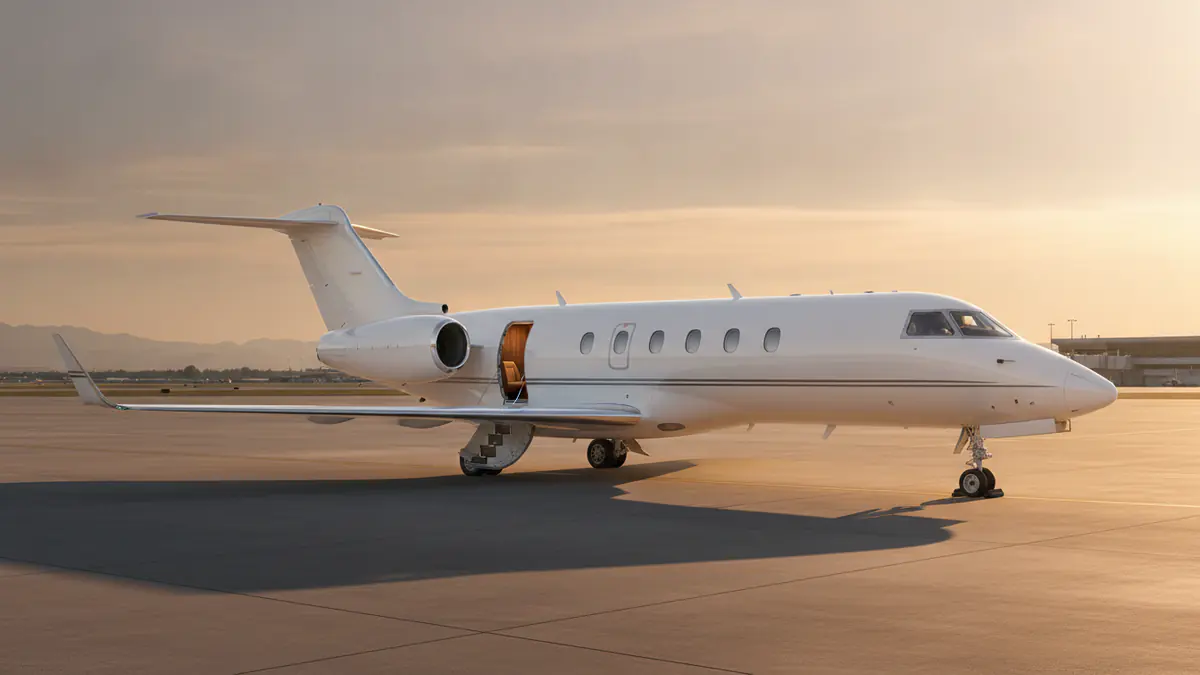
The Cessna Citation XLS+ is a midsize jet built by Textron Aviation (Cessna, Beechcraft) with a published range of about 1,858 nm, typically carrying 6–8 passengers.
Unverified Specifications source: Wikipedia: Cessna Citation Excel, Specifications (Citation XLS+), citing Cessna's XLS+ site (3,441 km = 1,858 nm) (https://en.wikipedia.org/wiki/Cessna_Citation_Excel); Cleared: not stated by the source checked (Wikipedia: Cessna Citation Excel, Specifications (Citation XLS+), citi); left empty rather than keeping a demo value (https://en.wikipedia.org/wiki/Cessna_Citation_Excel); Cleared: not stated by the source checked (Wikipedia: Cessna Citation Excel, Specifications (Citation XLS+), citi); left empty rather than keeping a demo value (https://en.wikipedia.org/wiki/Cessna_Citation_Excel)
- Range
- 1,858 nm
- published, not practical
- Cruise
- 441 kt
- Passengers
- 6–8
- max 9 certified
- Cabin (H × W × L)
- Not yet verified
- Baggage
- Not yet verified
- In production
- Not yet verified
Where the Cessna Citation XLS+ can fly nonstop
Screened against our route set with a practical-range margin.
Of 104 city pairs we cover, the Cessna Citation XLS+ can typically fly 72 nonstop.
| Route | Distance | Range |
|---|---|---|
| New York – Dubai | 5,951 nm | Fuel stop likely |
| London – Los Angeles | 4,718 nm | Fuel stop likely |
| Geneva – Aspen | 4,543 nm | Fuel stop likely |
| New York – São Paulo | 4,162 nm | Fuel stop likely |
| London – Aspen | 4,140 nm | Fuel stop likely |
| Hong Kong – Sydney | 3,993 nm | Fuel stop likely |
| London – Miami | 3,823 nm | Fuel stop likely |
| Nice – New York | 3,464 nm | Fuel stop likely |
| Geneva – New York | 3,352 nm | Fuel stop likely |
| London – Washington, D.C. | 3,179 nm | Fuel stop likely |
Cessna Citation XLS+ charter cost
Charter pricing for midsize jets in our model runs US$4,500–US$7,000 per flight hour Estimate. Individual aircraft vary with age, interior, operator and base. This is the cost to charter, not to buy.
New York to Aspen: about 4 h 5 min, US$29,500–US$45,500 one way.
Singapore to Hong Kong: about 3 h 50 min, US$27,500–US$42,500 one way.
New York to Cancún: about 3 h 45 min, US$27,000–US$42,000 one way.
Other midsize jets
| Aircraft | Range | Passengers | Baggage |
|---|---|---|---|
| Cessna Citation XLS+ | 1,858 nm | 6–8 | — |
| Cessna Citation Latitude | 2,700 nm | 7–9 | 127 cu ft |
The Citation XLS in one paragraph
The Citation XLS is the midsize jet you are most likely to be offered when you ask for "something bigger than a light jet" for a two- to four-hour trip. Cessna's Model 560XL family, sold over the years as the Citation Excel, XLS, XLS+ and XLS Gen2, seats six to eight passengers in a cabin that most people can nearly stand up in, flies at a little over 440 knots, and is at home on shorter runways that bigger jets avoid. It is not the widest or the longest-range aircraft in its class. What it offers is a very large fleet, a simple, proven design and a cabin that is a clear step up from a light jet for a modest difference in price.
This page adds judgement to the data above: the facts strip, the table of trips it can fly nonstop, the cost section and the list of other midsize jets. The figures in our dataset, for the XLS+ and the aircraft we compare it with, are published manufacturer or public figures, not independently verified. Where we quote the manufacturer, we name the source.
We are a charter broker, not an airline or an operator. We do not own or fly the Citation XLS or any other aircraft. We ask licensed operators for suitable aircraft, compare what comes back and coordinate the trip for you. The JetPriceCheck homepage explains how that works.
Citation Excel, XLS, XLS+ and Gen2: what the names mean
People search for the "citation excel xls" as if it were one aircraft, and in practice it nearly is. The names mark stages of one design:
- Citation Excel. The original model, which entered service in the late 1990s. According to Wikipedia's Citation Excel article, Cessna built it by pairing a shortened version of the Citation X fuselage cross-section with a straight wing derived from the Citation V and Ultra. The result was a cabin taller and wider than the light Citations, on a wing that handles short runways well.
- Citation XLS. An update in the mid-2000s with improved engines and a glass cockpit.
- Citation XLS+. Introduced around 2008, with FADEC-controlled Pratt & Whitney Canada PW545C engines (full-authority digital engine control, which manages the engines automatically), a revised nose and newer avionics. This is the version in our dataset.
- Citation XLS Gen2. Textron Aviation's current XLS page presents a Gen2 version with a refreshed cabin and updated connectivity options.
For a charter passenger, the practical difference between an Excel and an XLS+ is mostly the age of the airframe and the interior. Many older aircraft have been refurbished, and some newer ones have not been used hard, so the model name tells you less than the year, the last refurbishment date and the photographs of the specific aircraft. When we present options, we ask the operator for those details.
Our facts strip gives no production status for the XLS+. Textron markets the Gen2 version as the current model, so check the current model line if it matters to you.
Citation XLS specs in plain terms
Published figures for the XLS+, as summarised on Wikipedia from Cessna's own material, give a range of about 1,858 nautical miles and a maximum cruise speed of about 441 knots, the figures in our facts strip. In everyday terms:
- Range. Published range assumes ideal conditions. After winds, reserves and a realistic load, you can plan on trips of roughly three and a half to four hours for most sectors. Our private jet range guide explains why the planning figure is always below the brochure figure.
- Speed. At around 440 knots, the XLS is typical of the midsize class. On a 90-minute trip it is only a few minutes slower than faster jets, but on four-hour trips those minutes add up.
- Seats. Up to nine certified seats; six to eight is the comfortable charter number. Most layouts have a four-seat club section with further seats behind it and a belted lavatory seat.
- Cabin. Around 5 feet 8 inches tall and 5 feet 6 inches wide, with a cabin length of about 18 and a half feet, according to Textron's XLS Gen2 page; our dataset has no cabin figures for the XLS+. Many adults can walk with a slight stoop; shorter passengers can stand upright.
- Baggage. Our sources give no volume for the XLS+; most of it is in an external hold at the rear. For comparison, the Latitude publishes about 127 cubic feet.
Where the Citation XLS can fly nonstop
The screening table above checks every city pair we cover against the XLS's practical range, and it passes 72 of our 104 corridors as nonstop. These are screening estimates; the operator confirms the plan for your date, load and weather.
The list divides into three groups.
The short hops it does with ease. New York to Boston, Washington, D.C. or Philadelphia; Los Angeles to Las Vegas, San Diego or San Francisco; London to Paris or Geneva; Milan to Rome; Barcelona to Madrid; Dubai to Doha or Riyadh. On these, the XLS is often more cabin than the trip needs. A light jet usually suits one or two passengers; the XLS makes sense when the group is larger or the luggage is bulky.
Its best territory: two to four hours. New York to Miami, Chicago or Aspen; Los Angeles to Dallas, Seattle or Vancouver; London to Ibiza or Madrid; Munich to Paris; Dubai to Jeddah or Mumbai; Singapore to Hong Kong or Bali; Melbourne to Sydney; Miami to Nassau or Cancún. These are the trips where a light jet feels cramped and a super midsize jet is more aircraft than you need.
The edge of its range. New York to Aspen is the longest nonstop trip in the screening, at about four hours, with almost no margin; Dubai to Istanbul or Malé and Miami to Cabo San Lucas or Aspen screen as marginal. On these, headwinds, hot days and high-altitude airports matter. Aspen in particular has a short, high runway, and operators often limit how much fuel and weight they carry there, especially in summer heat. The screening may say nonstop while an operator plans a stop on a specific day.
What the XLS does not reach nonstop in our screening: New York to Los Angeles, Miami to Los Angeles, and the Gulf-to-Europe flights such as Dubai to Milan or Rome. Those trips need a Citation Latitude or a super midsize jet, or a fuel stop. A fuel stop costs about 45 minutes on the ground plus the extra climb and descent, so on a trip you take often, the larger aircraft may be worth it.
Inside the Citation XLS: cabin and interior
"Citation XLS interior" is one of the most searched questions about this aircraft, because the cabin is what separates it from light jets. Here is what to expect.
Height and aisle. The cabin is tall enough that most passengers can move down the aisle without the crouch of a light jet, though taller adults will still stoop. It is described as near stand-up rather than stand-up. If standing upright is a must, the Latitude's six-foot cabin is the step to take.
Seating layout. The common layout is a four-seat club facing a pair of forward- or rear-facing seats, sometimes with a side-facing seat opposite the door. Club seats have fold-out tables between them, which suits working on a laptop or eating a meal.
Galley. Expect a refreshment centre at the front with space for cold catering, ice and hot drinks. It is not a full kitchen; hot meals depend on the airframe's equipment. Tell us if hot catering matters.
Lavatory. A private lavatory at the rear, closed off by a door or partition on most aircraft. The seat is usually belted for take-off and landing on nine-seat layouts, which is one reason eight is a better planning number.
Connectivity. Wi-Fi varies widely between airframes. Some have satellite or air-to-ground systems; some have none. If you need to work online, ask before you book, not at the aircraft steps.
Noise and comfort. The XLS is a straight-wing jet, which gives it a firm, stable ride at lower altitudes. Most passengers find it comfortable on trips up to about three hours.
Luggage in practice
The hold is usually enough for six to eight people travelling with carry-on bags and one medium suitcase each. Golf bags usually fit; several pairs of skis and hard-shell cases may not. The main hold is external, so you cannot reach it in flight. Send us a list of what you are bringing, and we will check it with the operator before you commit.
Short runways: the XLS's quiet strength
One reason the XLS is so common in charter fleets is that it can use runways where larger jets are limited. The straight wing gives it good performance at low speed, which helps at smaller regional and resort airports. On the corridors we cover, that matters most for Nantucket, Aspen and several island airports in the Caribbean and the Mediterranean.
It also lets you use the smaller airport closest to your meeting or home rather than the main hub. The operator's performance calculations decide what is possible on the day.
Citation XLS vs the Citation Latitude and other rivals
The peer table above lists other aircraft in the midsize class in our dataset. On our site, that means the Citation Latitude; in the market you may also be offered older types from other manufacturers. The main choice most travellers face is XLS or Latitude.
| Citation XLS | Citation Latitude | |
|---|---|---|
| Cabin | Near stand-up, narrower | Stand-up, flat floor, wider |
| Comfortable group | 6–8 | 7–8 |
| Published range | About 1,858 nm | About 2,700 nm |
| Baggage (dataset) | No figure | About 127 cu ft |
| Nonstop corridors in our screening | 72 | 79 |
| Coast-to-coast nonstop | No | Often, season dependent |
| Estimate band in our model | Midsize rate | Midsize rate |
Both sit in the same rate band in our pricing model, so the estimate difference comes from speed and flight time rather than from a higher hourly rate. In the real market, a Latitude often costs more per hour than an XLS because it is newer and in greater demand; your quotes will show whether that holds for your dates. Read our Citation Latitude guide for the full picture on the larger cabin.
A simple rule:
- Choose the XLS for trips of up to about three and a half hours, groups of six or fewer with normal luggage, and airports with short runways.
- Choose the Latitude for longer sectors, for groups who want to stand up and move around, for more luggage, or for coast-to-coast trips.
Against light jets such as the Embraer Phenom 300E, the XLS offers a taller cabin and room for a larger group; the Phenom is often faster and a little cheaper to charter. Against the Citation X, which shares a similar cabin cross-section, the XLS is slower but costs less and uses shorter runways. Our midsize jet charter overview compares the whole class.
Citation XLS charter cost
People search for "citation xls price" meaning two different things. The purchase price of the aircraft is outside what we do; this page covers the charter cost.
Our pricing model, built on published market rates, uses a midsize rate of USD 4,500 to 7,000 per flight hour, and the cost section above applies it to sample trips. These are estimates, not quotes and not offers. Some examples from the same model, one way and including an allowance for positioning:
- New York to Miami: about 2 h 45 min, roughly USD 20,000–31,000.
- London to Geneva: about 1 h 30 min, roughly USD 10,500–16,500.
- New York to Aspen: about 4 h 5 min, roughly USD 29,500–45,500.
A return trip in the same model costs less than two one-way trips, because the aircraft does not have to reposition empty in between; New York to Miami and back comes out at roughly USD 25,000–38,500 before overnight costs. Our private jet cost guide explains how the model works and what it leaves out.
What moves a real Citation XLS quote:
- Where the aircraft is based. An XLS based at your departure airport saves hours of positioning.
- Trip shape. One-way trips often pay for the empty return.
- Waiting time. Crew overnights, hotel and parking are added if the aircraft stays with you.
- Airport and handling fees. They vary widely between airports and seasons.
- Peak dates. Holiday weekends, ski weeks and major events tighten supply.
- Airframe age and interior. A recently refurbished XLS+ can cost more than an older Excel.
Only a licensed operator's quote for a specific aircraft and date is firm.
Empty legs
Because the XLS fleet is large, it produces a steady flow of one-way repositioning flights. These empty legs can cost well below a normal charter, but the date, time and route are set by the original booking and can change. Our empty leg flights page explains how to use them for flexible trips.
How we arrange a Citation XLS charter
- Tell us the trip. Dates, airports or cities, passengers, luggage and anything special such as pets, catering or Wi-Fi.
- We ask licensed operators for an XLS and comparable midsize jets near your departure point.
- You compare options side by side: aircraft year, interior photographs, positioning, overnight costs and what is included.
- You confirm on the operator's terms. The operator flies the trip; we coordinate.
- We stay with you through weather, slot delays and changes of plan.
The private jet routes directory has flight times and estimates route by route, and the full aircraft guide covers every category we offer. When you are ready, request a quote from JetPriceCheck.
Citation XLS FAQ
How far can a Citation XLS fly?
Published figures give a range of about 1,858 nautical miles for the XLS+. Practical range is lower after winds, reserves and a full load, which in our screening covers trips such as New York to Aspen but not New York to Los Angeles.
How many passengers does a Citation XLS seat?
Up to nine certified seats. For comfort, plan on six to eight passengers, and fewer on longer trips or with a lot of luggage.
Can you stand up in a Citation XLS?
Almost. The cabin is about 5 feet 8 inches tall by Textron's figures, so shorter adults can stand and most others walk with a slight stoop. The Citation Latitude offers a full six-foot cabin.
Is the Citation Excel the same as the XLS?
They are the same basic design. The Excel is the original model; the XLS and XLS+ added newer engines, avionics and interiors, and the Gen2 is the latest update. The airframe's year and refurbishment matter more to passengers than the name.
How much does it cost to charter a Citation XLS?
Our pricing model, built on published market rates, uses USD 4,500–7,000 per flight hour for midsize jets. Positioning, fees, overnight costs and dates all change the total, and only an operator's quote is firm.