Airport
Fort Lauderdale Executive Airport for private jets
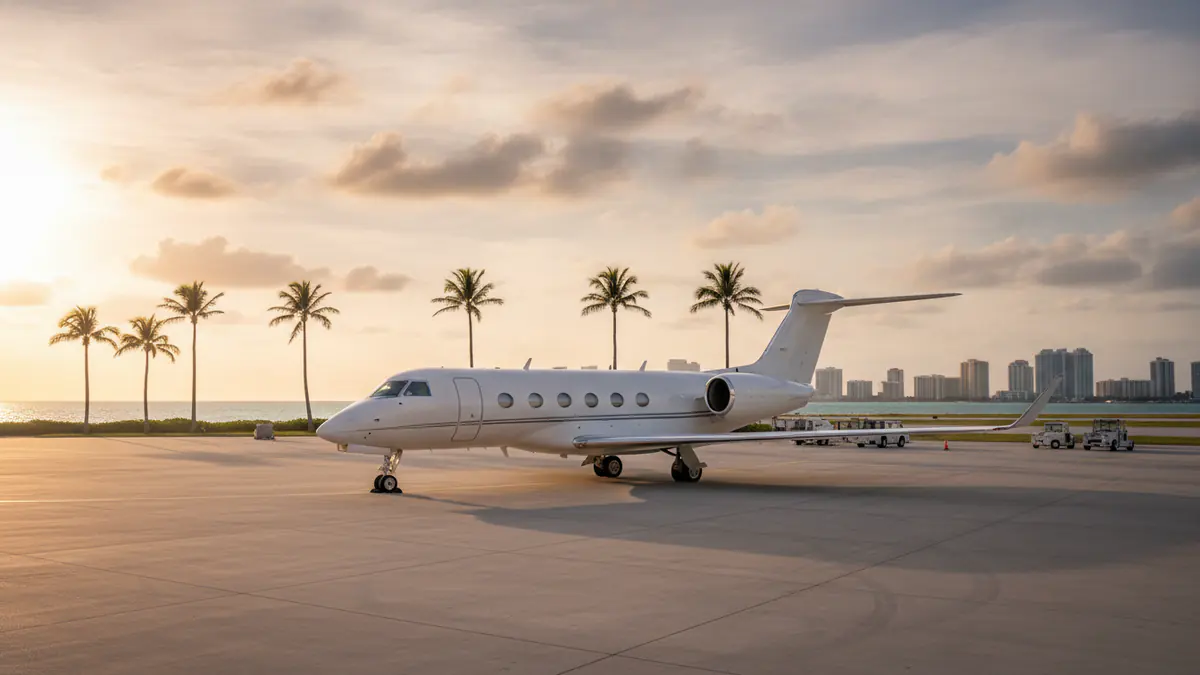
Fort Lauderdale Executive Airport (KFXE, FXE) is a business aviation airport serving Miami, United States.
Unverified Source: OurAirports (public domain, data of 2026-09-26): coordinates, IATA code, runways. Customs, hours and notes not yet verified.; FAA Chart Supplement (effective 03 SEP 2026), FORT LAUDERDALE EXEC (KFXE): LRA (Landing Rights Airport; CBP permission to land required in advance) (https://aeronav.faa.gov/afd/03sep2026/se_108_03SEP2026.pdf); FAA Chart Supplement (effective 03 SEP 2026), FORT LAUDERDALE EXEC (KFXE): LRA (Landing Rights Airport; CBP permission to land required in advance) (https://aeronav.faa.gov/afd/03sep2026/se_108_03SEP2026.pdf)
- ICAO / IATA
- KFXE / FXE
- Type
- Business aviation airport
- Longest runway
- 6,002 ft
- Customs
- On request
- Hours
- Not yet verified
- Coordinates
- 26.1973, -80.1707
Getting to Fort Lauderdale Executive
Driving route from the city centre. Times vary with traffic; your driver or the FBO can advise on the best pick-up time.
Aircraft that can use it
By runway length alone, turboprops, light jets, midsize jets, super midsize jets, heavy jets and ultra long range jets can typically use Fort Lauderdale Executive. Operators confirm performance, slots and restrictions for each flight.
FBOs at Fort Lauderdale Executive
No verified FBO records yet.
Empty legs from Fort Lauderdale Executive
No live empty legs are connected for this search yet. Empty legs appear here only from real operator inventory; we never show made-up availability. A specialist can still check one-way opportunities for your dates.
Private jet routes from Fort Lauderdale Executive
Flying a private jet Fort Lauderdale Executive: an overview
A private jet Fort Lauderdale Executive arrival puts you in the heart of Broward County, a few minutes from the offices of Uptown Fort Lauderdale and a straightforward drive from Las Olas Boulevard, the beaches and the cruise port. Fort Lauderdale Executive Airport, known by its codes KFXE and FXE, is a dedicated general and business aviation airport on the north side of the city, and it is one of the most active airports of its kind in the United States.
The sections above this guide show the airport's key facts, live weather, the driving route from central Miami and the routes we cover. This guide explains when FXE is the right choice, how it compares with the other South Florida airports, what to know about its runways, customs and noise rules, and how to plan your transfer.
We are a charter broker. We do not own or operate aircraft; we arrange flights with licensed operators, compare what is available for your date and stay with the trip until you land. You can read more about how we work on the JetPriceCheck homepage.
What kind of airport FXE is
Fort Lauderdale Executive is owned by the City of Fort Lauderdale, not by the county authority that runs the city's airline airport, Fort Lauderdale-Hollywood International. It is designated as a reliever airport, meaning it exists partly to keep general and business aviation traffic away from the busy airline hub. The city reports that its control tower runs around the clock and handles around 200,000 operations a year, which puts it among the busiest general aviation airports in the country.
For a private passenger, the experience is the one you would expect from a business aviation airport: no airline terminal, no public security lines and no baggage hall. You arrive at a private terminal run by a fixed-base operator, or FBO, meet your crew and board. When you land, the aircraft taxis to the FBO ramp and your car can usually meet you close by, subject to the FBO's security procedures.
The airport also sits next to a growing business district. The area around it, often called Uptown, has attracted offices and hotels, and for a business traveller with meetings there, it is hard to beat an airport you can see from the conference room.
Runways and the aircraft that use FXE
According to the FAA and published airport data, FXE has two runways: runway 9/27, about 6,000 feet long, and runway 13/31, about 4,000 feet long. The FAA's airport page is a good starting point for current details.
That runway length suits most of the private fleet. Light jets, midsize and super midsize jets operate here routinely, and many large-cabin jets can use FXE depending on their weight and the day's conditions. The runway becomes a factor for the largest aircraft on long flights: a heavy jet departing for Europe or the West Coast with full fuel may need more runway than FXE offers, especially on a hot summer day. In that case the operator may suggest a nearby airport with a longer runway, such as Opa-locka or Palm Beach, for the long-haul departure, or a fuel stop.
This is a decision for the operator, who calculates the aircraft's performance for each flight. Our own runway figure in the data table above is not yet verified, which is why the page does not screen aircraft categories automatically. You can compare categories, ranges and cabin sizes in our private jet aircraft guide.
Customs at Fort Lauderdale Executive
FXE has a U.S. Customs and Border Protection facility on the east side of the airfield, according to the airport's facilities page. That makes it a practical port of entry for flights from the Bahamas, the Caribbean and Latin America, and for guests who want to land close to Fort Lauderdale rather than clearing customs in Miami.
As with any general aviation customs facility, a few rules apply:
- Appointments. Clearance is arranged in advance, and the aircraft must arrive within the agreed window.
- Passenger data. The operator files passenger and crew details with CBP before the flight, so it needs your passport information early.
- Documents. Every passenger needs the correct passport and entry authorisation for the United States.
- Hours. Customs hours are published by the airport and can change; we confirm them for your arrival time when we book.
Noise rules and night flying
FXE sits in a densely populated area, and the city runs a noise abatement programme that relies on cooperation between the airport, its users and the community. The measures are voluntary rather than a formal curfew. They include the use of quieter departure and arrival procedures published by the NBAA or the aircraft manufacturer, a preferred runway for departures at night when the wind allows, and limits on training flights at night and at weekends.
For a charter passenger, the practical effect is small. Late-night and early-morning flights are possible, but operators will follow the airport's noise procedures, and some prefer to schedule departures at civil hours when they can. If you need a very early or very late flight, tell us when you enquire, and we will check that the operator is comfortable with the timing.
FXE compared with other South Florida airports
South Florida has several airports that handle private jets, and the right one depends on where you are going.
FXE versus Miami-Opa Locka Executive
Miami-Opa Locka Executive Airport is about 18 nautical miles south of FXE in our data. It is the main business aviation airport for Miami, with longer runways and on-field customs. If your trip is centred on Miami, Miami Beach or the Miami Grand Prix circuit, Opa-locka is usually closer. If you are staying in Fort Lauderdale or the northern beaches, FXE is the more convenient choice, and it is a natural overflow airport when Opa-locka's ramps are full.
FXE versus Fort Lauderdale-Hollywood International
The city's airline airport, south of downtown, handles business jets too, but it is a busy commercial hub. For most private flights, FXE's quieter airspace and dedicated business aviation facilities make for a smoother arrival.
FXE versus Palm Beach International and Miami International
Palm Beach International is about 29 nautical miles north of FXE in our data, and Miami International is about 25 nautical miles south. Palm Beach serves its own market of residents and seasonal visitors, while Miami International is a major airline hub. Both can take very large aircraft, but for Broward County, FXE is the local choice.
To see every airport in the region side by side, our Miami private jet airports guide lists them with their roles and distances.
Getting to and from Fort Lauderdale Executive
The map above shows the drive from central Miami, which is useful if you are staying in Miami but choose FXE for the aircraft or the schedule. In practice, most FXE passengers are heading somewhere in Broward County:
- Uptown and the business district: a very short drive; the airport is surrounded by offices and hotels.
- Downtown Fort Lauderdale and Las Olas Boulevard: south along the main roads towards the city centre.
- Fort Lauderdale Beach and the Galt Ocean Mile: east towards the coast.
- Port Everglades: south to the cruise port, a common trip for families joining a cruise.
- Boca Raton and Palm Beach County: north along the main highways.
Rush-hour traffic on the main north–south highways is heavy, so plan your pickup time with your driver or the FBO.
When FXE is busiest
Fort Lauderdale's high season runs through the winter, roughly from November to April, when visitors from the north-east, the Midwest, Canada and Europe arrive for the warm weather. The boating world gathers in Fort Lauderdale in the autumn for its large boat show, and the city's marinas bring yacht owners and crews through the airport all year. Cruise departures from Port Everglades create steady traffic of families who want to fly private to the ship.
FXE is also affected by events in Miami. When the Miami Grand Prix or Art Basel Miami Beach fill the ramps at Opa-locka, some aircraft land at FXE instead, or drop passengers in Miami and reposition here to park. The Atlantic hurricane season runs from 1 June to 30 November, and a storm can disrupt flights across South Florida at short notice.
Who flies private through FXE
The airport's users are as varied as the region. Business travellers fly into Uptown for meetings or to visit company offices. Families from colder climates spend the winter in Fort Lauderdale and fly home for holidays. Yacht owners and their guests arrive to join a boat, and cruise passengers fly in the day before departure. Islanders and visitors fly to and from the Bahamas, using the airport's customs facility on the way back.
Private jet routes from Fort Lauderdale Executive
Our corridor pages for the Miami area are modelled from Opa-locka, but operators can usually quote the same trips from FXE, and for guests staying in Broward County the difference in drive time can be worth it. Popular options include:
- The islands: Miami to Nassau, about 161 nm in our data, is a short hop.
- Florida and the south-east: Orlando and Atlanta are short domestic flights.
- Mexico: Cancún and Cabo San Lucas are popular winter escapes.
- The West: Los Angeles and Aspen, where the operator will check whether FXE's runway suits the aircraft and fuel load.
See our Miami private jet charter hub for every route from the region, or the full charter route directory.
What a private flight from FXE costs
The estimates on our route pages come from a demonstration pricing model: they are estimates, not quotes. The final price depends on the aircraft category, the hours flown, whether the aircraft must position to FXE from another airport, whether it waits for you or flies home between legs, and fees such as landing, handling, parking and customs. Our private jet cost guide explains each factor. When you have dates in mind, ask JetPriceCheck for a quote and we will compare what operators can offer.
Aircraft that drop passengers in South Florida often fly home empty, and those empty legs can be good value if your schedule is flexible. Our empty-leg flights page lists what is available.
Planning checklist for a private jet Fort Lauderdale Executive trip
- Start with where you are staying: FXE suits Broward County, Opa-locka suits Miami.
- For a long flight in a large-cabin jet, ask whether the operator will depart from FXE or from a longer runway nearby.
- Share passport details early for any international leg, so the operator can arrange customs.
- Tell us if you need a very early or very late departure, so we can check it against the airport's noise procedures.
- Check whether your dates overlap a major event in Miami or Fort Lauderdale, when ramps fill up.
- In late summer and autumn, keep some flexibility for the weather.
- If you are joining a cruise or a yacht, allow a comfortable margin between landing and boarding, and tell us about any extra luggage such as dive or fishing equipment.
Frequently asked questions
Is Fort Lauderdale Executive the same as Fort Lauderdale-Hollywood International?
No. FXE is a separate business and general aviation airport owned by the City of Fort Lauderdale, on the north side of the city. Fort Lauderdale-Hollywood International is the airline airport south of downtown.
Can I clear customs at FXE?
Yes. The airport has a U.S. Customs and Border Protection facility. Clearance is arranged in advance, and the operator files the passenger data before the flight.
Can large private jets use Fort Lauderdale Executive?
Many can, depending on weight and conditions. The main runway is about 6,000 feet long, so for long flights in the largest jets the operator may suggest a longer runway nearby.
Is there a curfew at FXE?
There is no formal curfew, but the airport runs a voluntary noise abatement programme, including a preferred runway for night departures. Operators follow these procedures.
Should I choose FXE or Opa-locka?
Choose FXE if you are staying in Fort Lauderdale or the northern beaches, and Opa-locka if your trip is centred on Miami.
Sources
- Fort Lauderdale Executive Airport (FXE) – City of Fort Lauderdale
- Facilities – Fort Lauderdale Executive Airport
- Noise Abatement Program – Fort Lauderdale Executive Airport
- Ft. Lauderdale Executive Airport (FXE) – Federal Aviation Administration
- Fort Lauderdale Executive Airport (Wikipedia)
- Fort Lauderdale Executive Airport (FXE) – NBAA